Baklava Guide: Types, How to Store It & How to Spot the Good Stuff
Walnut or pistachio, şöbiyet or havuç dilimi? The main types of baklava, how to store it so it stays crisp and how to tell good baklava from bad.
Quick answer: Store baklava at room temperature, loosely covered, away from heat and sun. It stays at its best for about a week. Don't refrigerate it: the cold hardens the pastry and makes the syrup crystallise. For longer storage, freeze it airtight for up to 3 months and thaw it at room temperature. Good baklava is golden rather than dark, crisp on top, moist but not soggy, and made with plenty of nuts.
Key takeaways
- The two classic fillings are walnut (cevizli) and pistachio (fıstıklı). Gaziantep is famous for pistachio.
- Antep baklava was the first Turkish product with EU protected geographical indication status, in 2013.
- Keep baklava at room temperature, freeze it for long storage and avoid the fridge.
- If the syrup is pooling at the bottom of the tray, the balance is off. Good baklava absorbs its syrup.
What makes baklava, baklava?
Baklava is made from many layers of very thin pastry (yufka) brushed with butter, layered with chopped nuts, cut before baking and soaked in syrup after baking. The quality depends on how thin the sheets are, how good the butter is and how well the syrup is balanced. In Gaziantep, master bakers roll dozens of sheets thin enough to read through.
In December 2013, Antep Baklavası became the first Turkish product registered as a Protected Geographical Indication in the EU (FoodNavigator; Hürriyet Daily News). Its key ingredient is the local Antep pistachio.
The main types of baklava
| Type | What it is | Texture |
|---|---|---|
| Cevizli baklava | Classic square slices with walnuts | Crisp top, soft nutty centre |
| Fıstıklı baklava | Pistachio filling, Gaziantep style | Very thin, crisp layers; bright green centre |
| Havuç dilimi | "Carrot slice": a triangle cut from a round tray | Thicker at the outer edge |
| Kuru baklava | "Dry" baklava with less syrup | Crunchy, travels well |
| Şöbiyet | Triangles with a layer of semolina cream and pistachios | Creamy and rich |
| Sarma / burma | Pastry rolled or twisted around whole nuts | Chewy and nut-packed |
| Bülbül yuvası | "Nightingale's nest": a coil with a pistachio centre | Crunchy |
| Soğuk baklava | "Cold baklava" soaked in a milk-based syrup and served chilled | Soft and creamy, a modern favourite |
Start with our walnut baklava, or try the baklava slices recipe for a quicker version.
How to store baklava (cheat sheet)
| Method | How | How long | Notes |
|---|---|---|---|
| Room temperature (best) | Loosely covered with foil or in a tin with the lid ajar, somewhere cool and dry | About 5 to 7 days at its best | An airtight box traps moisture and softens the top layers |
| Fridge (avoid) | Only for cream-filled types such as şöbiyet and soğuk baklava, or in very hot weather | Up to 1 week | Cold makes the syrup crystallise and the pastry hard. Bring to room temperature before serving. |
| Freezer | In an airtight container, layers separated with baking paper | Up to 3 months | Thaw uncovered at room temperature for 2 to 3 hours |
| Reviving | Oven at 150 °C (300 °F) for 5 to 8 minutes, then cool | — | Brings back crispness to baklava that has gone soft |
Five signs of great baklava
- Colour: Golden, not dark brown. Dark baklava has been overbaked or made with burnt butter.
- Sound: When you press it with a fork, the top layers should crackle.
- Syrup: Moist all the way through, with no syrup pooling in the tray and no sticky, gummy texture.
- Nuts: A generous, even layer. Pistachio baklava should be vivid green inside, a sign of early-harvest pistachios.
- Aftertaste: Clean and buttery, not greasy or sugary. Good baklava doesn't leave a film on your tongue.
The syrup rule
Every Turkish baker follows one rule: one component hot, the other cool. Pour cooled syrup over baklava straight from the oven, or hot syrup over baklava that has cooled. If both are hot, the pastry goes soggy. If both are cold, the syrup sits on top. Add lemon juice at the end of boiling so the syrup doesn't crystallise. Our guide to non-crystallising syrup gives exact ratios and boiling times.
Homemade pastry or shop-bought filo?
Good shop-bought filo makes very good baklava at home. Keep the sheets under a damp towel while you work and brush every layer with clarified butter. If you want to go further, our homemade baklava dough guide explains how bakers use starch and a thin rolling pin (oklava) to roll sheets you can see through. Clarified butter matters too, because the milk solids in regular butter burn. See our ghee guide.
How to serve baklava
- With Turkish coffee or black tea. Their bitterness balances the sweetness.
- With a spoonful of kaymak (clotted cream) or a scoop of stretchy Maraş-style ice cream.
- In small pieces: two or three slices per person is a generous serving.
For more syrup desserts and milk puddings, see our list of 15 classic Turkish desserts.
Chef's tip: Cut baklava all the way through before baking, right down to the bottom sheet. Cutting after baking crushes the crisp layers, and the syrup can't soak evenly into every piece.
Buying baklava as a gift or sending it abroad
- How much to buy: In Turkey baklava is sold by the kilo. As a guide, 1 kg of classic square baklava is usually 25 to 40 pieces, depending on size, which is plenty for 8 to 12 people with coffee.
- Choose a type that travels: Kuru (dry) baklava and walnut or pistachio squares travel best. Cream-filled şöbiyet and soğuk baklava need to be kept cold.
- Packaging: Buy it in a sealed tin or a vacuum-packed box, keep it upright and away from heat, and don't leave it in a hot car.
- Flying: Baklava is generally fine in checked luggage in a sealed tin. Check the airline's rules and the food import rules of the country you're flying to, especially for dairy-based sweets.
- On arrival: Open the box, leave it loosely covered and eat within a week, or freeze portions.
Frequently asked questions
Does baklava need to be refrigerated?
No. Classic walnut or pistachio baklava keeps best at room temperature, loosely covered. Only cream-filled types (şöbiyet, soğuk baklava) or baklava kept in a very hot climate should go in the fridge.
How long does baklava last?
About a week at room temperature at its best, and it's often still good up to two weeks. It keeps up to 3 months in the freezer in an airtight container.
How can you tell if baklava has gone bad?
Signs include a sour or rancid smell from the butter or nuts, mould, or a very hard, crystallised texture. If the nuts taste bitter or stale, throw it away.
Is pistachio or walnut baklava better?
It's a matter of taste. Pistachio baklava, the Gaziantep speciality, is more delicate and more expensive. Walnut baklava is richer and more common in home kitchens.
Why is my homemade baklava soggy?
Usually both the syrup and the baklava were hot, or there was too much syrup. Follow the hot/cold rule and bake until the top layers are properly golden.
Sources
- FoodNavigator: Turkish baklava gains EU PGI status (Dec 2013)
- Hürriyet Daily News: Antep baklava, first registered Turkish product in the EU
- Gaziantep Chamber of Industry: Antep baklava
Written by the House Chef Cyprus editorial team, Cyprus. Last reviewed: September 2026.
Reklam
Related recipes
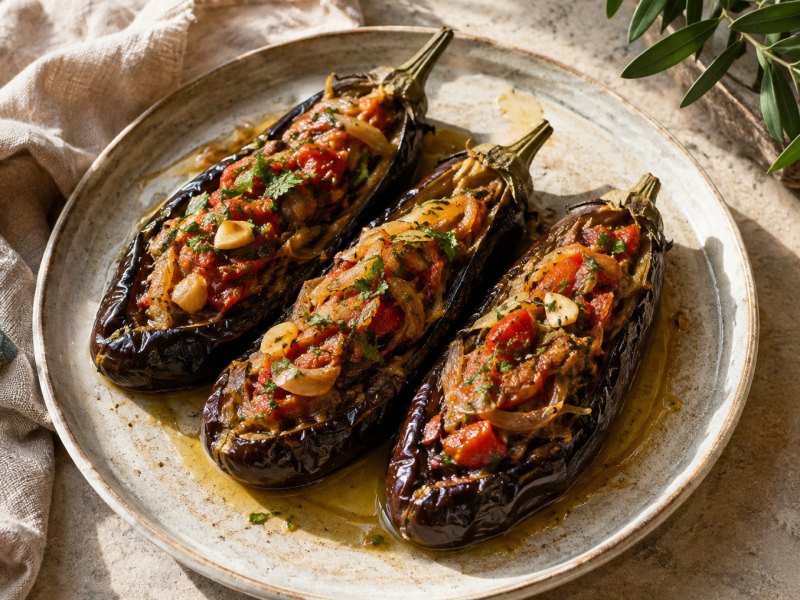
Imam Bayildi — Stuffed Aubergines in Olive Oil
The aubergines are softened in the oven rather than deep-fried, and the onions are cooked until sweet. Served warm, never hot.
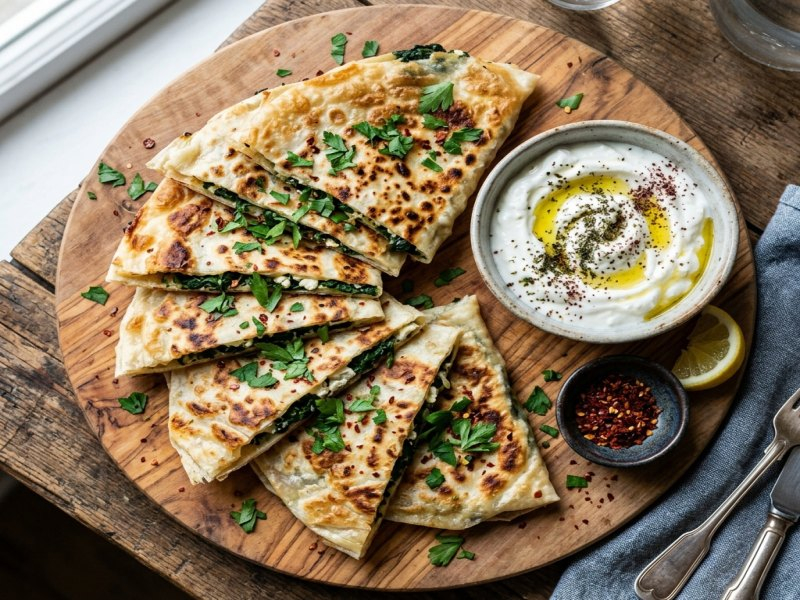
Spinach Gözleme
Thin dough filled with spinach, onion and white cheese, cooked on a griddle or in a pan. If the spinach isn't squeezed dry, the dough tears.
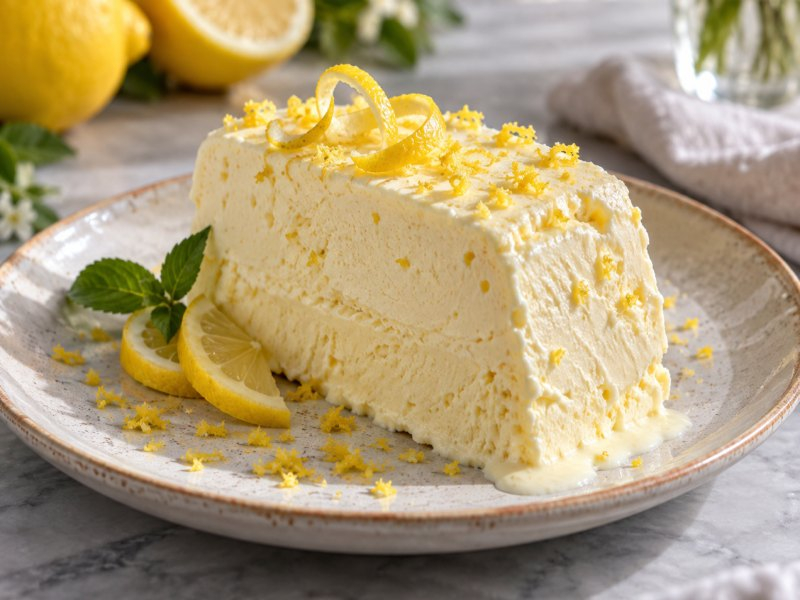
Lemon Semifreddo
An Italian frozen dessert that needs no ice-cream machine: egg yolks cooked over a water bath, lemon and cream. Served in slices.
Related guides
Vegan & Vegetarian Turkish and Cypriot Food: A Plant-Based Guide
Read more →Types of Turkish Kebab: A Complete Guide from Adana to İskender
Read more →Types of Turkish Börek: A Complete Guide to Turkey's (and Cyprus's) Savoury Pastries
Read more →Reklam