Leftover Food Safety Guide: Proper Chilling, Reheating and Flavor Revival
Learn how to store leftovers safely, prevent microbial growth, and reheat foods to retain crispness and moisture without getting that stale leftover taste.
No unrelated or generic photo is shown until a topic-specific visual with verified licensing and provenance is approved.
Leftover Food Safety Guide: Proper Chilling, Reheating and Flavor Revival
Minimizing food waste is both a culinary virtue and a cultural cornerstone of Mediterranean village cooking. However, mishandling cooked foods during storage or reheating can lead to foodborne illness or result in dry, unpalatable meals.
Understanding food hygiene science, storage timelines, and gentle reheating techniques ensures your second-day meals taste as extraordinary as freshly cooked dishes.
1. The Two-Hour Rule & The Temperature Danger Zone
Microorganisms thrive and multiply exponentially between 5°C and 60°C (40°F – 140°F), known as the Temperature Danger Zone.
- The Mistake: Leaving a large pot of warm stew on the stove overnight to "cool slowly."
- The Protocol: Cooked foods must be cooled and refrigerated within two hours of cooking.
- Fast Cooling Technique: Divide large pots of soup, stew, or rice into shallow glass containers (under 5 cm deep). Shallow vessels disperse heat quickly, allowing the food to chill safely through the danger zone inside the refrigerator.
2. Safe Refrigerator Storage Timelines
| Food Category | Max Safe Fridge Storage (at 4°C / 40°F) | Storage Best Practice |
|---|---|---|
| Cooked Poultry & Meat | 3 to 4 days | Airtight glass container, juices included |
| Cooked Fish & Seafood | 1 to 2 days | Consume promptly; best repurposed into salads |
| Cooked Rice & Grains | 2 to 3 days | Cool immediately; reheat to steaming hot |
| Legumes & Vegetable Stews | 4 to 5 days | Often improves in flavor by day two |
| Dairy-Based Sauces & Creams | 2 to 3 days | Keep tightly sealed away from aromatic foods |
Note on Rice Safety: Cooked rice can harbor Bacillus cereus spores, which survive boiling. Always refrigerate leftover rice promptly; never let it linger at room temperature.
3. How to Reheat Without Ruining Texture
Don't Default to the Microwave for Everything:
- For Stews and Soups: Reheat on the stovetop over low-medium heat. Add 2 to 3 tablespoons of warm broth or water to replace evaporated moisture.
- For Roasted Poultry and Fried Bites: Reheat in a preheated oven or air fryer at 180°C (350°F) for 6 to 8 minutes. This restores skin crispiness that a microwave would turn rubbery.
- For Rice Pilaf: Place rice in a heatproof bowl, sprinkle 1 tablespoon of water over the top, cover with an inverted plate or damp parchment paper, and steam gently.
4. Reheat to 74°C (165°F) Once Only
Only reheat the portion you intend to eat immediately. Repeatedly heating and chilling the same batch degrades vitamins, breaks down sauce emulsions, and increases bacterial contamination risks.
Written by the safety and culinary team at House Chef Cyprus. Discover zero-waste Mediterranean recipes: HouseChef Cyprus
Şefin Tavsiyesi · Ekipman
Bu Rehberde Önerilen Profesyonel Mutfak Ekipmanları
Rehberimizdeki teknikleri ve ada tariflerini evinizde şef standartlarında uygulamanız için tavsiye ettiğimiz mutfak gereçleri:

Pirge Ecco Profesyonel Şef Bıçağı 20 cm
Et, sebze ve taze ot doğramada mutfakta hız ve hassasiyet sağlayan yüksek karbonlu paslanmaz çelik bıçak.

Fakir / Soehnle Dijital Hassas Mutfak Tartısı
House Chef ölçülerinin ve hamur işlerinin tam kıvamında tutması için 1 gram hassasiyetinde dara özellikli tartı.
* Bilgilendirme: Bu kutuda yer alan ürün yönlendirmeleri gelir ortaklığı (affiliate) kapsamındadır. Beğendiğiniz ürünleri satın almanız durumunda siteye ek maliyet yansımaksızın küçük bir komisyon sağlanır.
Reklam
Frequently asked questions
Sıcak yemeği doğrudan buzdolabına koyabilir miyim?
Büyük ve derin bir kapta koymayın. Yemeğin ortası saatlerce 5-60°C tehlike aralığında kalır ve buzdolabının iç sıcaklığını yükselterek diğer gıdaları riske atar. Yemeği 5-7 cm derinliğinde sığ kaplara bölüp 20-30 dakika ılıtın, sonra kaldırın.
Artan yemek buzdolabında kaç gün durur?
Etli ve tavuklu yemekler ile çorbalar 3-4 gün, balık 1-2 gün, pilav ve makarna 1-2 gün, soslu salatalar aynı gün tüketilmelidir. Pilav özel dikkat ister çünkü Bacillus cereus toksini ısıya dayanıklıdır ve yeniden ısıtmak onu etkisiz hâle getirmez.
Yemeği kaç kez ısıtabilirim?
Bir kez. Yemeğin tamamını her defasında ısıtıp soğutmak, her turda tehlike aralığından geçirir. Yiyeceğiniz kadarını ayırıp ısıtın, kalanı buzdolabında bırakın. Isıtırken merkez sıcaklığı 75°C civarına, yani buharı çıkacak ve en az iki dakika fokurdayacak düzeye gelmelidir.
Kokusu normal olan yemek güvenli midir?
Hayır, bu güvenilir bir ölçüt değildir. Bakteri üremesi çoğu zaman koku, tat veya görünümde değişiklik yaratmaz. Koku bozukluğu varsa yemek kesinlikle atılmalıdır, ancak kokunun normal olması güvenli olduğunu göstermez. Süre ve sıcaklık kurallarına güvenin.
Dondurulmuş yemeği nasıl çözmeliyim?
Buzdolabında çözün, tezgâhta değil. Tezgâhta çözülen yemeğin dış yüzeyi saatlerce tehlike aralığında kalırken içi hâlâ donmuş olur. Acele ediyorsanız mikrodalganın çözdürme programını kullanın ve hemen pişirin. Çözülüp tekrar donmuş yemeği tüketmeyin.
Related recipes

Flaouna — Cypriot Easter Cheese Bread
An Easter bread filled with anari and halloumi, scented with mahlep and mastic in the dough. In Cyprus it is known as pilavuna.

Kolokoti — Cypriot Pumpkin and Bulgur Pasty
Pumpkin, bulgur and raisins in an olive oil pastry — the classic Cypriot pasty of the fasting season.

Turkish Cheese Börek
A tray börek moistened with a milk-and-oil mixture rather than soaked, with the cheese's salt balanced first.
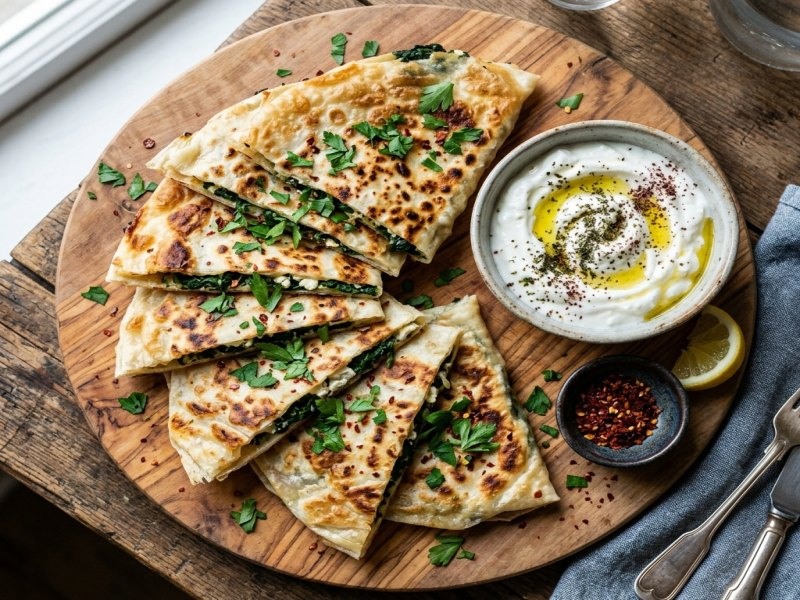
Ispanaklı Gözleme (Authentic Mediterranean Recipe)
Learn how to prepare authentic Ispanaklı Gözleme with traditional techniques, balanced seasonings, and step-by-step guidance.
Related guides
Cypriot Food Glossary: 25 Terms in English, Turkish and Greek
Read more →Guide to Evde Gercek Su Boregi Hamuru Ve Haslama Teknikleri
Read more →Guide to Kibris Sicak Humus Paca Nasil Yapilir Firinda Tahin
Read more →Reklam