Essential Ingredients of the Cypriot Pantry: Halloumi, Olive Oil, and Island Herbs
Master Cypriot home cooking by understanding its core pantry: artisanal halloumi, coriander seeds, extra virgin olive oil, and village bulgur.
No unrelated or generic photo is shown until a topic-specific visual with verified licensing and provenance is approved.
Essential Ingredients of the Cypriot Pantry: Halloumi, Olive Oil, and Island Herbs
Mastering any culinary tradition does not begin with memorizing dozens of complex recipes; it starts with understanding the foundational ingredients that make that cuisine unique.
The Cypriot kitchen revolves around a concise palette of eight to ten quintessential pantry staples. Once you understand how they behave, you will be able to intuitively cook authentic Mediterranean dishes with ease.
🧀 1. Artisanal Halloumi (Hellim)
Halloumi is Cyprus’s most celebrated culinary export, yet it is frequently misunderstood outside the island.
- Why It Doesn't Melt: Made from curd heated in fresh whey, its unique protein structure resists melting over high temperatures. This allows it to form a crisp, golden caramelized crust on a barbecue or skillet while remaining wonderfully chewy inside.
- Fresh vs. Mature Halloumi: Fresh halloumi is tender and mildly salted, ideal for slicing into breakfast pans or grilling. Mature halloumi (eski hellim) is air-dried and aged in brine until hard and intensely savory, designed for grating generously over hot pasta and savory pies.
- Chef’s Tip: Never boil halloumi. If it tastes too salty, simply soak slices in cold tap water for 20 minutes before patting dry and grilling on a smoking hot dry pan.
🫒 2. Cold-Pressed Extra Virgin Olive Oil
In the Cypriot kitchen, olive oil serves two distinct purposes:
- Cooking Base: For gently sweating onions and aromatics at moderate temperatures.
- Finishing Flavor: Unheated extra virgin olive oil is drizzled generously over cooked legume stews, fresh tomato salads, and yogurt mezes just before serving to preserve its delicate grassy notes.
Storage Rule: Keep olive oil in a dark, cool cupboard away from sunlight and the heat of the stove, preventing oxidation.
🍋 3. Lemons: The Island's Natural Acid
Lemons are indispensable in Cypriot cooking, balancing rich meats and earthy legumes.
- Timing is Everything: Adding all your lemon juice at the start of cooking causes delicate aromatic oils to evaporate. For maximum brightness, add half at the beginning of braising and the remainder fresh just before plating.
- Lemon Zest: The colorful outer peel contains concentrated citrus oils that give Cypriot baked cakes and pastries their distinct island fragrance.
🌿 4. Coriander Seeds (Kişniş) & Dried Spearmint
- Cracked Coriander Seeds: This is the hallmark spice that distinguishes Cypriot meat preparations from mainland Anatolian recipes. Toast whole coriander seeds dry in a pan for 30 seconds before coarsely crushing them in a mortar.
- Dried Spearmint (Kuru Nane): Dried mint possesses a much warmer, deeper aroma than fresh mint leaves. It is the signature seasoning in cool cucumber cacık, halloumi fillings, and braised meat stews.
🌾 5. Village Bulgur (Bulgur)
Cyprus has cultivated coarse wheat bulgur for centuries. In traditional recipes, 1 volume of coarse bulgur absorbs 2 volumes of hot stock, yielding tender, separate grains infused with golden onions and tomato paste.
This guide was crafted by the culinary editorial team at House Chef Cyprus. Authentic recipes and culinary guides: HouseChef Cyprus
Şefin Tavsiyesi · Ekipman
Bu Rehberde Önerilen Profesyonel Mutfak Ekipmanları
Rehberimizdeki teknikleri ve ada tariflerini evinizde şef standartlarında uygulamanız için tavsiye ettiğimiz mutfak gereçleri:

Pirge Ecco Profesyonel Şef Bıçağı 20 cm
Et, sebze ve taze ot doğramada mutfakta hız ve hassasiyet sağlayan yüksek karbonlu paslanmaz çelik bıçak.

Fakir / Soehnle Dijital Hassas Mutfak Tartısı
House Chef ölçülerinin ve hamur işlerinin tam kıvamında tutması için 1 gram hassasiyetinde dara özellikli tartı.
* Bilgilendirme: Bu kutuda yer alan ürün yönlendirmeleri gelir ortaklığı (affiliate) kapsamındadır. Beğendiğiniz ürünleri satın almanız durumunda siteye ek maliyet yansımaksızın küçük bir komisyon sağlanır.
Reklam
Frequently asked questions
Hellim tuzlu geldiğinde ne yapmalı?
Pişirmeden önce 20-30 dakika soğuk suda bekletin ve suyu bir kez değiştirin. Kaynar suya atmayın; sıcak su dokusunu bozar ve hellim lastikleşir. Tuzu düşük taze hellim tercih ederseniz bu adıma çoğu zaman gerek kalmaz.
Kişniş tohumu ile öğütülmüş kişniş arasında fark var mı?
Belirgin fark vardır. Tane kişniş çok daha aromatiktir. Kullanmadan önce kuru tavada 30-40 saniye kavurup havanda kabaca ezmek aromayı kat kat artırır. Öğütülmüş kişniş üç ay içinde aromasının çoğunu kaybettiği için küçük paket almak daha doğrudur.
Zeytinyağlı yemeklerde yağı azaltabilir miyim?
Azaltırsanız yemek hafiflemiş olmaz, eksik olur. Zeytinyağlılarda yağ, yemek soğurken sebzeye sinerek dokuyu ve tadı kurar; bu tarifin tekniğinin parçasıdır. Daha hafif bir sonuç istiyorsanız zeytinyağlı yerine ızgara veya fırın tariflerine yönelmek daha doğru olur.
Köftelik bulgur yerine pilavlık kullanabilir miyim?
Kolokoti gibi iç harç tariflerinde kullanmayın; pilavlık bulgur nemi aynı şekilde tutmaz ve iç dağılır. Pilavlık bulgur pilav ve dolma içi için, köftelik bulgur köfte, kısır ve iç harçlar içindir.
Salçayı ne zaman eklemeliyim?
Salçayı doğrudan sıvıya atmayın. Önce yağda 1-2 dakika kavurun; bu ham tadını alır ve rengini açar. Aynı kural kuru baharatlar için de geçerlidir, çünkü aromatik bileşikler suda değil yağda çözünür.
Related recipes
Flaouna — Cypriot Easter Cheese Bread
An Easter bread filled with anari and halloumi, scented with mahlep and mastic in the dough. In Cyprus it is known as pilavuna.
Kolokoti — Cypriot Pumpkin and Bulgur Pasty
Pumpkin, bulgur and raisins in an olive oil pastry — the classic Cypriot pasty of the fasting season.

Turkish Cheese Börek
A tray börek moistened with a milk-and-oil mixture rather than soaked, with the cheese's salt balanced first.
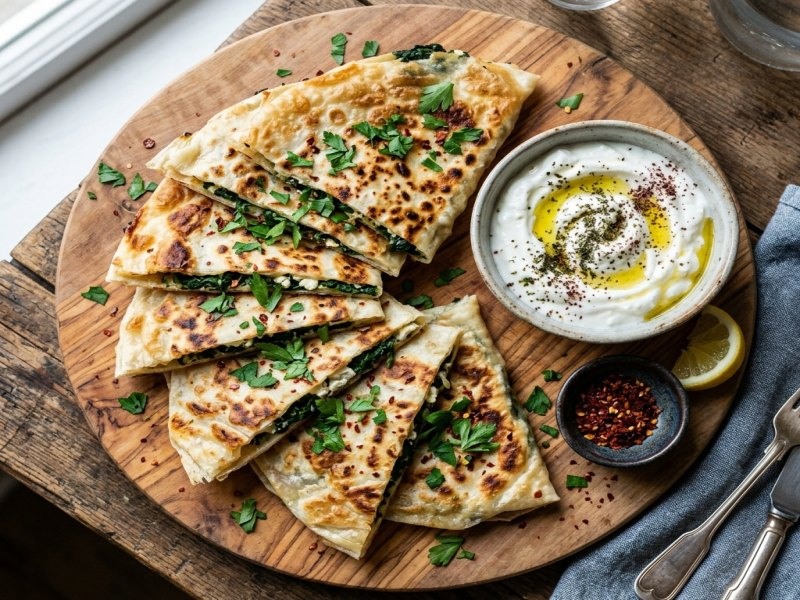
Ispanaklı Gözleme (Authentic Mediterranean Recipe)
Learn how to prepare authentic Ispanaklı Gözleme with traditional techniques, balanced seasonings, and step-by-step guidance.
Related guides
Hands-Free Cooking Mode: How Step-by-Step Digital Guidance Improves Kitchen Flow
Read more →Summer Mediterranean Dining: Cooling Mezes, Crisp Salads and Olive Oil Dishes
Read more →Cypriot Meze Table: 10 Essential Cold & Hot Small Plates for Guests
Read more →Reklam