Pumpkin Season in Cyprus and Turkey: Kolokoti, Kabak Tatlısı & More
Autumn in Cyprus and Turkey means pumpkin: kabak tatlısı with tahini, Cypriot kolokoti, pumpkin-tahini börek and soup, plus buying tips.
No unrelated or generic photo is shown until a topic-specific visual with verified licensing and provenance is approved.
Quick answer:In Turkey and Cyprus, autumn pumpkin becomeskabak tatlısı(pumpkin candied in its own juice, served with tahini and walnuts),kolokoti(Cypriot pasties of pumpkin, bulgur, raisins and cinnamon),tahinli kabak böreği(Cypriot pumpkin and tahini pastry) and silkybalkabağı çorbası(pumpkin soup). The seeds are roasted and salted as a favourite snack.
Key takeaways
- Pumpkin season runs fromOctober to winter, when dense, sweet winter pumpkins fill the markets.
- Kabak tatlısıneeds no water: the pumpkin cooks in the juice it releases under sugar.
- Tahiniis pumpkin's classic partner in both Turkish and Cypriot cooking.
- Choose a pumpkin that's heavy for its size, with a dry, firm stem.
First, the names
Squash names cause a lot of confusion in recipes. Here's a quick guide:
| English | Turkish | Cypriot / Greek |
|---|---|---|
| Pumpkin / winter squash | Balkabağı (or bal kabağı) | Kolokotes are pumpkin pasties;kolokythais squash |
| Courgette / zucchini | Kabak (sakız kabağı) | Kolokythaki |
| Taro (not a squash) | Kolokas | Kolokasi |
| Pumpkin seeds | Kabak çekirdeği | Pasatempo (roasted seeds) |
"Kabak tatlısı" usesbalkabağı, despite the short name. And Cypriotkolokasis a root vegetable, not a pumpkin.
1. Kabak tatlısı: Turkey's candied pumpkin
This is the classic autumn dessert in Turkey. Thick pumpkin slices are layered with sugar and left overnight. By morning they're sitting in their own syrup. They're then cooked slowly, covered, until translucent and glossy, and cooled completely. To serve, spoon over tahini and scatter with crushed walnuts. Some cooks add kaymak.
- Peel 1 kg pumpkin and cut it into 3 to 4 cm slices. Layer it in a wide pan with about 200 g sugar.
- Cover and leave overnight at room temperature, or for at least 6 hours, until plenty of juice has collected.
- Cook covered over low heat for 40 to 60 minutes, without stirring, until the pieces are tender and translucent. Uncover for the last 10 minutes to thicken the syrup.
- Cool completely in the pan, then chill. Serve with tahini and walnuts.
Follow ourpumpkin dessert with tahini and walnuts. It's naturally vegan.
2. Kolokoti: the Cypriot pumpkin pasty
Kolokoti (pluralkolokotes) are half-moon pasties filled with grated pumpkin, fine bulgur, raisins, cinnamon, olive oil and a little sugar and salt. The filling is sweet and savoury at the same time, and the dough is a simple olive-oil pastry. Village bakeries make them through autumn and winter (Oldways).
The most common mistake is using raw, wet pumpkin. Grate it, salt it, leave it for 30 minutes, then squeeze it dry by hand before mixing, or the pastry will go soggy. Try our testedkolokoti recipe.
3. Tahinli kabak böreği: Cypriot pumpkin and tahini pastry
In Cypriot villages, winter pumpkin is paired with stone-ground tahini in a rich baked pastry. The tahini brings out the pumpkin's sweetness and gives a nutty depth. Here's ourCypriot pumpkin and tahini börek, and ourguide to börek.
4. Balkabağı çorbası: pumpkin soup
For Turkish-style pumpkin soup, sauté onion and carrot in olive oil, then add the pumpkin and let it colour in the fat before adding stock. That step gives more depth than boiling it in water. Blend until silky and finish with a swirl of cream or yogurt and pul biber butter. Make ourpumpkin soup, and see our12 classic Turkish soups.
5. Roasted pumpkin seeds (kabak çekirdeği)
Don't throw the seeds away. Rinse off the pulp, dry them, toss with a little salt and roast at 160 °C (320 °F) for 15 to 20 minutes until crisp. In Turkey, salted roasted pumpkin seeds are an everyday snack.
How to choose and store pumpkin
- Choose:Heavy for its size, with a dry, firm stem and no soft spots. For desserts, look for deep orange, dense flesh.
- Whole:Keeps for 1 to 3 months somewhere cool, dry and well ventilated.
- Cut:Wrap it and refrigerate. Use within 5 days.
- Freeze:Freeze raw cubes or roasted purée for up to 6 months. Frozen pumpkin works for soup, but it's too soft for kabak tatlısı.
Different pumpkins suit different dishes. For kabak tatlısı, use dense, deep-orange winter pumpkins or butternut squash that hold their shape. Watery, pale pumpkins sold for carving turn mushy and taste bland. For soup, almost any sweet pumpkin works, and roasting it first makes up for weaker flavour.
Chef's tip:For kabak tatlısı that keeps a slightly firm "candied" outside and a soft centre, some traditional cooks soak the slices briefly in water with a little food-grade lime (calcium hydroxide) and rinse well before sugaring. Only use lime sold for cooking and follow the label. Without it, just don't stir while it cooks, so the pieces hold their shape.
More autumn favourites
Pumpkin shares the autumn table with quince: try ourbaked quince with kaymak. The grape harvest bringsCypriot paluzeandköfter. For the full dessert list, see15 classic Turkish desserts.
One pumpkin, one week: a no-waste plan
Winter pumpkins are large, and one can feed a family for most of a week. Here's how Cypriot and Turkish home cooks use every part:
| Day | Part of the pumpkin | What to make |
|---|---|---|
| 1 | Seeds | Rinse, dry and roast them as a salted snack |
| 1–2 | The best thick, even slices | Kabak tatlısı: sugar them the first night, cook the next day |
| 2 | Irregular pieces and ends | Roast them with onion and carrot for pumpkin soup |
| 3–4 | Grated flesh | Kolokoti or pumpkin-tahini börek. Grate, salt and squeeze well. |
| 5 | Leftover roasted pieces | Mash into yogurt with garlic and dried mint for a quick meze, or fold into a bulgur pilaf |
| Any day | Extra cubes | Freeze raw for future soups |
Tip: when you cut a large pumpkin, scrape out the seeds and fibres straight away and wrap the cut faces tightly. The flesh stays fresher and doesn't pick up fridge smells.
Frequently asked questions
What is kabak tatlısı?
Kabak tatlısı is a Turkish dessert of pumpkin slices candied slowly in their own juice with sugar, served cold with tahini and crushed walnuts. It's naturally vegan.
What is Cypriot kolokoti?
Kolokoti is a Cypriot half-moon pasty filled with grated pumpkin, fine bulgur, raisins, cinnamon and olive oil. It's a sweet-savoury autumn and winter speciality.
Why does kabak tatlısı need to sit overnight?
The sugar draws water out of the pumpkin, so it cooks in its own juice without added water. That concentrates the flavour and gives the glossy candied texture.
Is kolokas a type of pumpkin?
No. Kolokas (kolokasi) is taro, a starchy root vegetable used in a traditional Cypriot stew. The similar name often confuses visitors.
Can I use butternut squash for kabak tatlısı?
Yes. Butternut squash works well because its flesh is dense and sweet. Cut it into thick, even pieces and use slightly less sugar, since it's naturally sweeter than many pumpkins.
When is pumpkin season in Cyprus and Turkey?
Winter pumpkins are harvested in late summer and autumn and fill the markets from about October through the winter. That's when kabak tatlısı, kolokoti and pumpkin soups appear on tables.
Sources
- Oldways: Kolokotes (Cypriot pumpkin pies)
- Cypriot cuisine overview
Written by the House Chef Cyprus editorial team, Cyprus. Last reviewed: September 2026.
Şefin Tavsiyesi · Ekipman
Bu Rehberde Önerilen Profesyonel Mutfak Ekipmanları
Rehberimizdeki teknikleri ve ada tariflerini evinizde şef standartlarında uygulamanız için tavsiye ettiğimiz mutfak gereçleri:
Braun MultiQuick 5 Vario El Blender Seti 1000W
Lokanta usulü ipeksi süzme mercimek çorbaları, pürüzsüz humus, ezmeler ve soslar için güçlü parçalayıcı bıçak sistemi.
Tefal Clipso Hassas Basınçlı Düdüklü Tencere 6L
Kuru fasulye, nohut ve kemikli et yemeklerini besin değerini koruyarak yarı sürede lokum gibi pişirir.
* Bilgilendirme: Bu kutuda yer alan ürün yönlendirmeleri gelir ortaklığı (affiliate) kapsamındadır. Beğendiğiniz ürünleri satın almanız durumunda siteye ek maliyet yansımaksızın küçük bir komisyon sağlanır.
Reklam
Frequently asked questions
Kabak tatlısına su eklenir mi?
Geleneksel tarifte kesinlikle su eklenmez. Dilimlenen kabaklar şekere yatırılıp bir gece bekletildiğinde kendi bol suyunu salar ve bu saf şerbette ağır ateşte pişer.
Kıbrıs kolokoti nedir?
Kıbrıs'a özgü yarım ay şeklinde bir börektir; rendelenmiş bal kabağı, ince bulgur, kuru üzüm, tarçın ve zeytinyağlı gevrek hamurla fırınlanır.
Kabak tatlısının sert ve çıtır olması için ne yapılır?
Hatay usulü kireçte kabak tatlısında dilimler sönmüş kireç suyunda birkaç saat bekletilir; böylece dışı cam gibi çıtır, içi ise lokum gibi yumuşacık olur.
Bal kabağı ile kolokas aynı şey midir?
Hayır. Bal kabağı turuncu tatlı bir kış kabağıdır; Kıbrıs kolokası ise patates benzeri, nişastalı ve etle pişirilen taro kök sebzesidir.
Tatlı için en iyi bal kabağı nasıl seçilir?
Kabuğu mat ve sert, ağırlığı boyutuna göre ağır, sapı kuru ve içi koyu turuncu renkli kış kestaneli bal kabakları en yüksek şeker ve lezzete sahiptir.
Related recipes

Yoğurtlu Yulaf Kasesi (Authentic Mediterranean Recipe)
Learn how to prepare authentic Yoğurtlu Yulaf Kasesi with traditional techniques, balanced seasonings, and step-by-step guidance.
Tarhana Soup
Slaking the tarhana in cold water before it meets heat is what keeps the soup lump-free; the body settles in fifteen minutes.
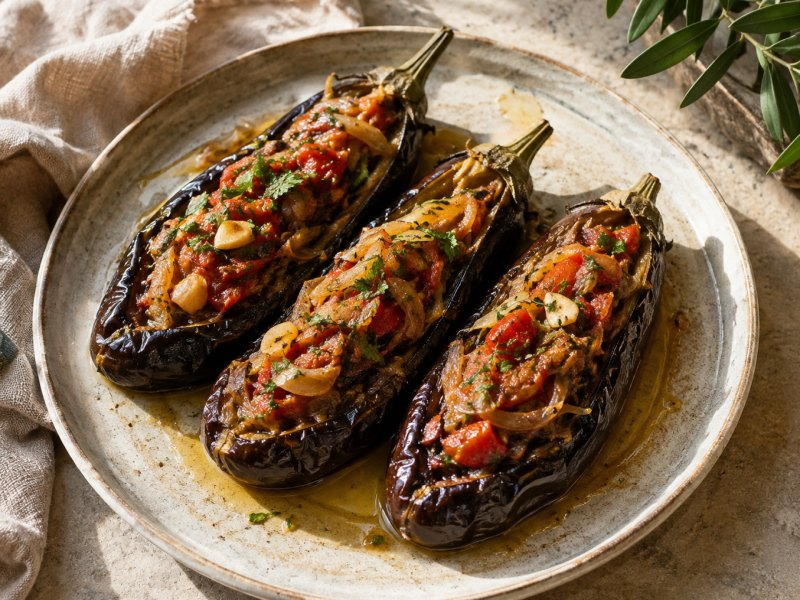
Imam Bayildi — Stuffed Aubergines in Olive Oil
The aubergines are softened in the oven rather than deep-fried, and the onions are cooked until sweet. Served warm, never hot.
Related guides
Vegan & Vegetarian Turkish and Cypriot Food: A Plant-Based Guide
Read more →Types of Turkish Kebab: A Complete Guide from Adana to İskender
Read more →Types of Turkish Börek: A Complete Guide to Turkey's (and Cyprus's) Savoury Pastries
Read more →Reklam