Aleppo Pepper vs Pul Biber vs Urfa Biber: A Guide to Turkish Chilli Flakes
Aleppo pepper, pul biber, Maraş and Urfa biber (isot): what's the difference, how hot is each and what to substitute? A guide with a heat chart and uses.
No unrelated or generic photo is shown until a topic-specific visual with verified licensing and provenance is approved.
Quick answer:Aleppo pepperand Turkishpul biberare essentially the same style of chilli flake: bright red, slightly oily, fruity, with moderate heat of around 10,000 Scoville units.Maraş pepperis a close regional cousin.Urfa biber (isot)is sun-dried and "sweated" overnight until it turns dark purple-black, and it tastes smoky and raisiny with milder heat, about 7,500 SHU. If you don't have Aleppo pepper, use 3 parts sweet paprika to 1 part ordinary crushed red pepper.
Key takeaways
- "Pul biber" means "flake pepper" in Turkish. It's the pepper you find on almost every Turkish table.
- Aleppo pepper is named after the Syrian city. Since the Syrian civil war, much of what's sold abroad is grown insouthern Turkey.
- Urfa biber's dark colour and smoky flavour come from itsdrying method, not from smoking.
- Generic "crushed red pepper" ismuch hotterand less fruity. Use less of it.
Turkish chilli flakes: heat and flavour chart
| Pepper | Approx. heat (SHU) | Colour | Flavour | Best for |
|---|---|---|---|---|
| Aleppo / pul biber | ~10,000 | Bright brick red | Fruity, sun-dried tomato, gentle salty oiliness | Finishing, eggs, kebabs, soups, salads |
| Maraş biber | Similar to Aleppo, varies by batch | Deep red, oily | Rich, fruity, rounded | Kebabs, meat marinades, butter sauces |
| Urfa biber (isot) | ~7,500 | Purple-black | Smoky, raisin, chocolate, tobacco | Grills, çiğ köfte, dark chocolate, lentils |
| Sweet paprika | Very low | Red | Sweet, earthy | Colour and base flavour |
| Crushed red pepper (generic) | Often 30,000+ | Orange-red with seeds | Sharp heat, little fruit | Pizza, when heat is the goal |
Heat levels are approximate and vary with harvest, drying and seed content. Aleppo and Urfa figures follow the references in our Sources section.
Aleppo pepper and pul biber
Aleppo pepper, also called Halaby pepper, takes its name from the old Silk Road city of Aleppo. It's aCapsicum annuumvariety that's semi-dried, deseeded, crushed and often lightly salted and oiled. That's why good flakes feel slightly moist rather than dusty. In Turkey the same style is simply calledpul biber, and it's said to be the country's third most-used seasoning after salt and black pepper (overview).
The war in Syria severely disrupted exports. Today, a large share of the flakes sold abroad as "Aleppo pepper" comes from growing regions in southern Turkey, where the same pepper style has long been cultivated. Pul biber from a good Turkish shop is therefore usually the same thing, often at a better price.
Use it everywhere: onTurkish eggs, inmenemen, inAdana kebaband sizzled in butter over lentil soup.
Maraş pepper
Maraş pepper comes from Kahramanmaraş in southern Turkey. It's a close cousin of Aleppo pepper: deep red, oily and full-flavoured, with heat that ranges from mild to fairly hot depending on the batch. Turkish shops sell both sweet (tatlı) and hot (acı) grades. In most recipes you can swap Maraş and Aleppo one for one.
Urfa biber (isot)
Urfa biber, known locally asisot, comes from Şanlıurfa and is a protected regional product in Turkey. Its method is what sets it apart: the peppers are sun-dried by day and wrapped tightly at night so the remaining moisture "sweats" back into the flesh. After days of this, the flakes turn a deep purple-black and develop a smoky, raisiny flavour with hints of chocolate and tobacco, although they're never actually smoked. Heat is milder, around 7,500 SHU, but it builds slowly and lasts (Urfa biber).
Isot is essential inçiğ köfteand Urfa-style kebabs. It's also good on roast vegetables, over grilled halloumi and in chocolate desserts.
Substitutes and ratios
| If you need | Use instead (per 1 tsp) | Notes |
|---|---|---|
| Aleppo / pul biber | ¾ tsp sweet paprika + ¼ tsp crushed red pepper | Add a few drops of olive oil and a pinch of salt |
| Aleppo / pul biber | 1 tsp Maraş pepper | Closest like-for-like swap |
| Urfa biber | ¾ tsp Aleppo + ¼ tsp smoked paprika + a pinch of cocoa | Mimics the smoky, dark notes |
| Crushed red pepper | ½ tsp Aleppo or pul biber, then taste | Aleppo is milder, so use more if needed |
| Cayenne | Not recommended | Much hotter, and has none of the fruitiness |
How to use Turkish chilli flakes like a local
- Bloom in fat:Warm butter or olive oil, take it off the heat, then stir in the flakes. The fat turns red and fragrant. Drizzle it over soups, yogurt and eggs.
- Rub into meat:Mix pul biber with salt, garlic and olive oil for kebabs and chicken.
- Sprinkle raw:On salads such asçoban salata, on pizza and pide, and on fried eggs.
- Relishes:An essential ingredient inacılı ezmeandlahmacuntopping.
For which spice suits which dish, see ourspice pairing table.
If you're new to these peppers, start with half a teaspoon per dish and adjust. Aleppo and pul biber make a good everyday flake, Urfa is best as a finishing pepper where you'll notice its smoky depth, and Maraş suits long-cooked meat dishes and butter sauces.
Chef's tip:Keep chilli flakes in an airtight jar away from light and heat, and buy small amounts. Pul biber fades from bright red to brown and loses its fruitiness within months. If yours has gone dull brown, it's time to replace it.
Other Turkish seasonings you'll see next to them
- Sumac:A tangy, deep red spice from dried sumac berries. It isn't a chilli and has no heat. It adds lemony sourness to onions, salads and grilled meats.
- Pepper paste (biber salçası):Sun-concentrated red pepper paste, sweet (tatlı) or hot (acı). It's the base of many stews, soups and çiğ köfte.
- Dried mint (kuru nane):Used more than fresh mint in cooking. It's sizzled in butter for soups and rubbed over yogurt dishes.
- Kekik (thyme/oregano):Wild thyme and oregano species, used on grills, salads and olives. In Cyprus, wild mountain thyme is especially prized. See ourKarpaz wild herbs guide.
- Kimyon (cumin):Essential in köfte and some bean dishes, used carefully so it doesn't overpower.
A simple Turkish table set-up is salt, black pepper, pul biber and sumac. Once you have those four, most Turkish recipes will taste right.
Frequently asked questions
Is pul biber the same as Aleppo pepper?
Essentially yes. Pul biber is the Turkish name for the same style of semi-dried, crushed, lightly oiled red pepper flakes sold abroad as Aleppo pepper. Much of today's Aleppo pepper is grown in Turkey.
How hot is Aleppo pepper?
Aleppo pepper is moderately hot, around 10,000 Scoville heat units. That's much milder than cayenne or generic crushed red pepper, and fruitier.
What does Urfa biber taste like?
Smoky, raisiny and slightly chocolatey, with mild heat that builds slowly. Its dark colour comes from being sun-dried and wrapped overnight, not from smoking.
What is a good substitute for Aleppo pepper?
Maraş pepper is the closest swap. Otherwise, mix three parts sweet paprika with one part crushed red pepper and add a pinch of salt.
Is sumac spicy?
No. Sumac has no chilli heat at all. It's a tangy, lemony spice made from dried sumac berries and is used to add sourness and colour to onions, salads and grilled meats.
Sources
- Aleppo pepper: heat, names and use in Turkey
- Urfa biber: sweating process, flavour and heat
- PepperScale: Urfa biber guide
Written by the House Chef Cyprus editorial team, Cyprus. Last reviewed: September 2026.
Şefin Tavsiyesi · Ekipman
Bu Rehberde Önerilen Profesyonel Mutfak Ekipmanları
Rehberimizdeki teknikleri ve ada tariflerini evinizde şef standartlarında uygulamanız için tavsiye ettiğimiz mutfak gereçleri:
Pirge Ecco Profesyonel Şef Bıçağı 20 cm
Et, sebze ve taze ot doğramada mutfakta hız ve hassasiyet sağlayan yüksek karbonlu paslanmaz çelik bıçak.
Fakir / Soehnle Dijital Hassas Mutfak Tartısı
House Chef ölçülerinin ve hamur işlerinin tam kıvamında tutması için 1 gram hassasiyetinde dara özellikli tartı.
* Bilgilendirme: Bu kutuda yer alan ürün yönlendirmeleri gelir ortaklığı (affiliate) kapsamındadır. Beğendiğiniz ürünleri satın almanız durumunda siteye ek maliyet yansımaksızın küçük bir komisyon sağlanır.
Reklam
Frequently asked questions
İsot neden siyah veya koyu mordur?
İsot fırında yakılmaz; gündüz Şanlıurfa güneşinde kurutulduktan sonra geceleri hava almayacak şekilde çuvallarda terletilerek kendi nemi ve ısısıyla fermente olur ve rengi koyulaşır.
Halep biberi ile Türk pul biberi aynı şey midir?
Evet, Halep biberi (Aleppo pepper) Gaziantep, Maraş ve Halep havzasında yetişen, çekirdekleri ayıklanıp hafif yağ ve tuzla çekilen pul biberin uluslararası adıdır.
Pul biber ne kadar acıdır (Scoville derecesi nedir)?
Klasik Maraş pul biberi ve Halep biberi yaklaşık 10.000 SHU, Urfa isotu 7.500 SHU civarındadır; yani Meksika jalapeño biberi seviyesinde tatlı-orta bir acılığa sahiptir.
Pul biber bozulur mu ve nasıl saklanmalıdır?
Havadaki nem ve ışık pul biberin rengini soldurur ve yağını acılaştırır. Koyu renkli cam kavanozda, serin yerde veya buzdolabında saklanmalıdır.
İsot hangi yemeklerde kullanılır?
Çiğ köfte, lahmacun, Urfa kebabı, mercimek köftesi, kuru fasulye ve hatta bitter çikolatalı tatlılarda eşsiz bir isli derinlik katar.
Related recipes

Zeytinyağlı Enginar (Authentic Mediterranean Recipe)
Learn how to prepare authentic Zeytinyağlı Enginar with traditional techniques, balanced seasonings, and step-by-step guidance.
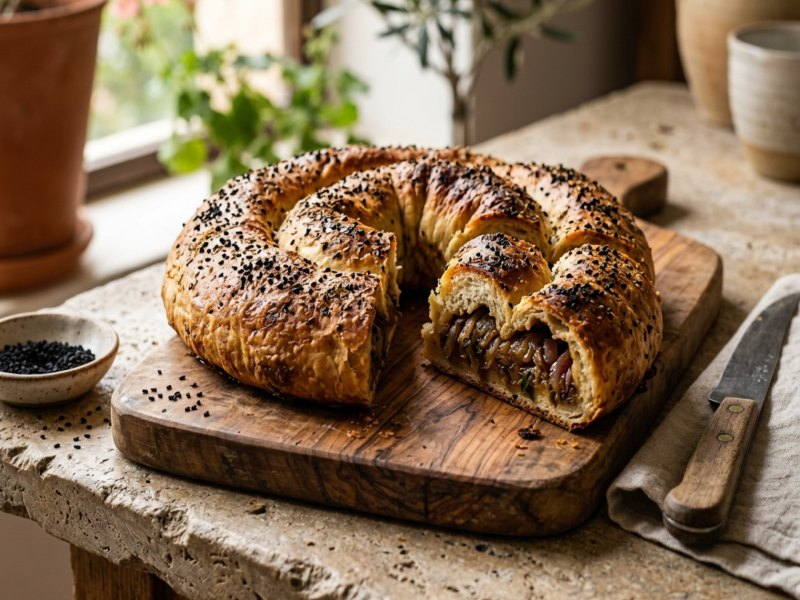
Soğanlı Çörek (Authentic Mediterranean Recipe)
Learn how to prepare authentic Soğanlı Çörek with traditional techniques, balanced seasonings, and step-by-step guidance.
Related guides
Vegan & Vegetarian Turkish and Cypriot Food: A Plant-Based Guide
Read more →Types of Turkish Kebab: A Complete Guide from Adana to İskender
Read more →Types of Turkish Börek: A Complete Guide to Turkey's (and Cyprus's) Savoury Pastries
Read more →Reklam