Turkish & Mediterranean Cup to Gram Conversion Guide: Su Bardağı & Spoons Explained
Wondering how many grams are in 1 Turkish water glass (su bardağı)? Definitive conversion tables for flour, sugar, olive oil, and yogurt for home cooks.
No unrelated or generic photo is shown until a topic-specific visual with verified licensing and provenance is approved.
Turkish & Mediterranean Cup to Gram Conversion Guide: Su Bardağı & Spoons Explained
If you have ever tried cooking traditional Turkish, Cypriot, or Greek recipes from family cooks, you have undoubtedly encountered measurements like "1 su bardağı un" (1 water glass of flour) or "2 yemek kaşığı zeytinyağı" (2 tablespoons of olive oil).
For international home cooks accustomed to standardized measuring cups or digital kitchen scales, these traditional home volume measurements can cause confusion.
This guide provides the exact gram and milliliter equivalents for standard Mediterranean kitchen measures.
🥛 What Exactly Is a "Su Bardağı"?
In Turkish and Cypriot culinary tradition, a standard su bardağı (classic ribbed water glass) has an internal liquid volume of 200 ml (6.76 fl oz).
Important Note: A US standard cup is 240 ml, while a Commonwealth cup is 250 ml. A traditional Mediterranean su bardağı is slightly smaller (200 ml). Using a standard 250ml cup instead of a 200ml glass will add 25% too much flour or sugar, altering delicate doughs and pastries!
📊 Quick Conversion Table: 1 Su Bardağı (200 ml Glass) to Grams
Because different ingredients have different physical densities, 200 ml of volume yields very different weights in grams:
| Ingredient | 1 Su Bardağı (Grams) | 1 US Cup (Grams) | Notes |
|---|---|---|---|
| All-Purpose Flour (Un) | 120 g | 140 g | Spooned and leveled, not packed down. |
| Granulated White Sugar (Şeker) | 170 g | 200 g | Standard crystalline sugar. |
| Powdered / Icing Sugar (Pudra Şekeri) | 110 g | 130 g | Sifted. |
| Coarse Bulgur (Pilavlık Bulgur) | 160 g | 190 g | Standard cracked wheat. |
| Rice (Pirinç) | 170 g | 200 g | Raw baldo or osmancık rice. |
| Extra Virgin Olive Oil (Zeytinyağı) | 180 g | 215 g | Liquid density ~0.91 g/ml. |
| Whole Milk / Water (Süt / Su) | 200 g (200 ml) | 240 g | Standard liquid density. |
| Strained Village Yogurt (Süzme Yoğurt) | 200 g | 240 g | Thick Mediterranean style. |
| Red / Green Lentils (Mercimek) | 160 g | 190 g | Raw, dry. |
| Walnut Halves / Hazelnuts (Ceviz) | 100 g | 120 g | Coarsely chopped. |
🥄 Spoon Measurements: Yemek Kaşığı & Tatlı Kaşığı
Traditional recipes frequently measure leaveners, spices, and small liquids with flatware:
- 1 Yemek Kaşığı (Tablespoon / Soup Spoon): ~15 ml
- Flour: ~10 g
- Granulated Sugar: ~15 g
- Olive Oil / Melted Butter: ~13 g
- Tomato Paste / Salça: ~20 g
- Yogurt: ~20 g
- 1 Tatlı Kaşığı (Dessert Spoon): ~10 ml
- Sugar: ~8 g
- Spices / Salt: ~8 g
- 1 Çay Kaşığı (Turkish Tea Spoon): ~5 ml (Equivalent to a standard international 1 teaspoon)
- Baking Powder: ~5 g
- Dry Yeast: ~3 g
- Ground Cinnamon / Cumin: ~3 g
⚖️ When Can You Use Glasses, and When Must You Use Scales?
- Safe for Glasses & Spoons: Soups, vegetable stews (zeytinyağlılar), meat marinades, and braised dishes. A 10% variation in olive oil or broth will never ruin a pot of lentil soup or chicken kleftiko.
- Digital Scales Recommended: Sensitive leavened pastries, baklava sheets, and delicate sponges (pandispanya), where the flour-to-liquid ratio determines gluten development.
This guide was crafted by the culinary editorial team at House Chef Cyprus. Authentic recipes and culinary guides: HouseChef Cyprus
Şefin Tavsiyesi · Ekipman
Bu Rehberde Önerilen Profesyonel Mutfak Ekipmanları
Rehberimizdeki teknikleri ve ada tariflerini evinizde şef standartlarında uygulamanız için tavsiye ettiğimiz mutfak gereçleri:

Pirge Ecco Profesyonel Şef Bıçağı 20 cm
Et, sebze ve taze ot doğramada mutfakta hız ve hassasiyet sağlayan yüksek karbonlu paslanmaz çelik bıçak.

Fakir / Soehnle Dijital Hassas Mutfak Tartısı
House Chef ölçülerinin ve hamur işlerinin tam kıvamında tutması için 1 gram hassasiyetinde dara özellikli tartı.
* Bilgilendirme: Bu kutuda yer alan ürün yönlendirmeleri gelir ortaklığı (affiliate) kapsamındadır. Beğendiğiniz ürünleri satın almanız durumunda siteye ek maliyet yansımaksızın küçük bir komisyon sağlanır.
Reklam
Related recipes
Flaouna — Cypriot Easter Cheese Bread
An Easter bread filled with anari and halloumi, scented with mahlep and mastic in the dough. In Cyprus it is known as pilavuna.
Kolokoti — Cypriot Pumpkin and Bulgur Pasty
Pumpkin, bulgur and raisins in an olive oil pastry — the classic Cypriot pasty of the fasting season.

Turkish Cheese Börek
A tray börek moistened with a milk-and-oil mixture rather than soaked, with the cheese's salt balanced first.
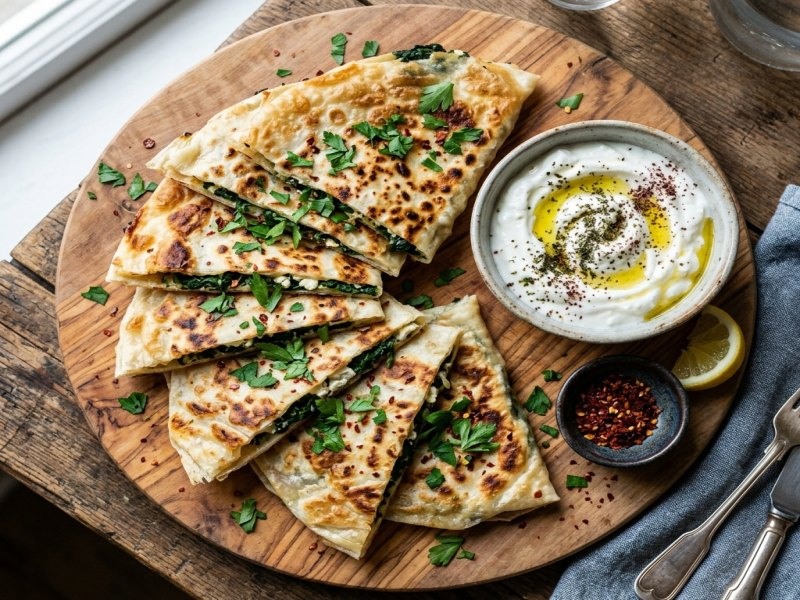
Ispanaklı Gözleme (Authentic Mediterranean Recipe)
Learn how to prepare authentic Ispanaklı Gözleme with traditional techniques, balanced seasonings, and step-by-step guidance.
Related guides
How to Scale Recipe Servings: Adjusting Ingredients, Spices and Pan Sizes
Read more →Kitchen Measurement Conversions: Grams to Cups, Spoons & Home Units
Read more →Reklam