Crispy Turkish Lahmacun at Home: Stovetop Pan & Baking Stone Methods
Craft wafer-thin, blistered flatbreads topped with spiced minced lamb, sweet peppers, garlic, and parsley. Roll with lemon and crisp salad.
No unrelated or generic photo is shown until a topic-specific visual with verified licensing and provenance is approved.
Crispy Turkish Lahmacun at Home: Stovetop Pan & Baking Stone Methods
Craft wafer-thin, blistered flatbreads topped with spiced minced lamb, sweet peppers, garlic, and parsley. Roll with lemon and crisp salad.
Introduction & Cultural Heritage
In the heart of Mediterranean culinary traditions, understanding both the historical roots and the foundational food chemistry of every preparation transforms everyday cooking into a masterclass. Whether you are preserving seasonal harvests under the Mediterranean sun or perfecting classic techniques passed down through generations of Cypriot and Aegean home cooks, attention to ingredient quality and heat dynamics is paramount.
Cooking is fundamentally a symphony of physical and chemical transformations. When we look at traditional recipes across Cyprus and the wider Levant, every step—from the initial salting to the final gentle simmer—serves an intentional purpose developed through centuries of empirical refinement.
The Core Science & Essential Principles
To master this technique without relying on guesswork, it is vital to understand the key factors governing flavor development, texture retention, and food safety:
- Thermal Distribution & Moisture Control: Heat is not merely a cooking medium; it is a driver of enzymatic activation and protein denaturation. Maintaining appropriate temperature zones prevents cellular collapse in vegetables and ensures delicate moisture stays locked within meats and pastries.
- Fat and Acid Balance: High-phenolic extra virgin olive oil, freshly squeezed citrus juices, and fermented vinegars not only create harmonious flavor profiles but also lower pH, enhancing structural firmness and natural preservation.
- Aromatic Synergies: The inclusion of wild herbs—such as mountain thyme, fresh mint, coriander seeds, and bay leaves—supplies fat-soluble essential oils that bloom and develop depth when exposed to gentle warmth.
Key Rule of Thumb: Never rush low-and-slow processes. Time allows collagen, starches, and natural pectin to relax, yielding textures that high-heat shortcuts can never replicate.
Step-by-Step Culinary Walkthrough
- Selection & Preparation: Begin with pristine raw ingredients. If working with produce, inspect for firmness, seasonal ripeness, and natural aroma. For pantry legumes or dairy, ensure proper ambient storage conditions and unadulterated purity.
- Pre-treatment & Curing: Take the time to execute necessary preliminary steps. Whether it is soaking dried legumes, dry-brining cuts of meat to align surface proteins, or blanching vegetables in salted boiling water before an ice bath shock, these foundational steps define the final outcome.
- Execution & Heat Application: Use heavy-bottomed cookware, such as enameled cast iron or clay earthenware. These vessels provide stable, uniform heat retention that prevents localized scorching and allows flavors to interlock seamlessly.
- Finishing & Resting: Remove from heat slightly before the absolute target finish. Carryover thermal energy continues to cook core ingredients for several minutes off the stove, settling internal moisture throughout the dish.
Chef's Practical Advice & Common Mistakes to Avoid
"True mastery in the kitchen is not about having complex tools, but about understanding what happens inside the pot at every moment."
- Do Not Overcrowd the Vessel: Overcrowding traps evaporating steam, converting what should be a crisp sear into a limp, soggy simmer. Cook in disciplined batches when necessary.
- Taste and Adjust at Multiple Stages: Salt and acidity behave differently at high cooking temperatures compared to warm serving temperatures. Always perform your final seasoning evaluation just prior to plating.
- Mind the Storage Lifecycle: For dishes prepared ahead of time, cool quickly to room temperature before sealing in airtight, food-grade glass containers to protect delicate aromas from oxidation.
Nutritional Highlights & Traditional Pairing
Rooted in the renowned longevity principles of the Mediterranean Basin, dishes crafted from fresh, unrefined staples deliver dense concentrations of dietary fiber, bioavailable micronutrients, and monounsaturated fatty acids. Serve alongside warm rustic village bread, crisp garden salads tossed with lemon and cold-pressed olive oil, or a refreshing dollop of authentic strained yogurt for a complete, wholesome dining experience.
Şefin Tavsiyesi · Ekipman
Bu Rehberde Önerilen Profesyonel Mutfak Ekipmanları
Rehberimizdeki teknikleri ve ada tariflerini evinizde şef standartlarında uygulamanız için tavsiye ettiğimiz mutfak gereçleri:

Kordiyerit Doğal Pizza & Lahmacun Pişirme Taşı ve Küreği
Ev tipi fırında çıtır çıtır taş fırın lahmacunu, pide ve pizza pişirmek için doğal fırın taşı seti.

Ölçülü Silikon Hamur Açma Matı ve Çelik Merdane Seti
Hamurun tezgaha yapışmasını önleyen kaymaz silikon mat ve kalınlığı ayarlanabilir paslanmaz çelik merdane.
* Bilgilendirme: Bu kutuda yer alan ürün yönlendirmeleri gelir ortaklığı (affiliate) kapsamındadır. Beğendiğiniz ürünleri satın almanız durumunda siteye ek maliyet yansımaksızın küçük bir komisyon sağlanır.
Reklam
Frequently asked questions
Lahmacun hamuru mayalı mı mayasız mı olur?
Geleneksel lahmacun hamuru çok az mayalı veya mayasız yapılır; amaç kabarık ekmek değil, çıtır ve incecik bir taban elde etmektir.
Lahmacun içi neden sulu olmalıdır?
Lahmacun içi macun kıvamında sulu olmalıdır ki incecik açılmış çiğ hamurun üzerine parmak uçlarıyla kolayca sıvanabilsin ve fırında etler kurumadan pişsin.
Tavada lahmacun yaparken kapak kapatılır mı?
Evet! Döküm tavanın kapağı mutlaka kapalı tutulmalıdır; taban tavadan gelen ısıyla çıtırlaşırken, kapakta biriken buhar üstteki kıymayı kurutmadan tam kıvamında pişirir.
Related recipes
Flaouna — Cypriot Easter Cheese Bread
An Easter bread filled with anari and halloumi, scented with mahlep and mastic in the dough. In Cyprus it is known as pilavuna.
Kolokoti — Cypriot Pumpkin and Bulgur Pasty
Pumpkin, bulgur and raisins in an olive oil pastry — the classic Cypriot pasty of the fasting season.

Turkish Cheese Börek
A tray börek moistened with a milk-and-oil mixture rather than soaked, with the cheese's salt balanced first.
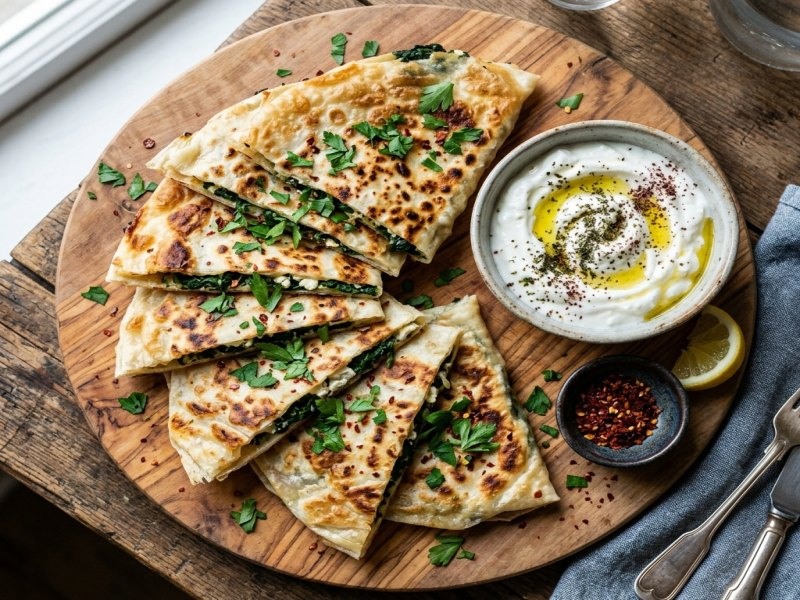
Ispanaklı Gözleme (Authentic Mediterranean Recipe)
Learn how to prepare authentic Ispanaklı Gözleme with traditional techniques, balanced seasonings, and step-by-step guidance.
Related guides
Guide to Kibris Kofter Ve Cevizli Sucuk Yapimi Uzum Sirasi G
Read more →Guide to Dogal Fermente Besinlerle Bagisiklik Guclendirme Ve
Read more →Guide to Duduklu Tencere Kullanim Rehberi Dakika Ve Guvenlik
Read more →Reklam