How to Fix Soup Consistency: Silky Broths, Slurries and Velvety Emulsions
Is your soup too watery or overly thick? Master the essential culinary techniques to adjust soup consistency using roux, cornstarch slurries, and vegetable purées.
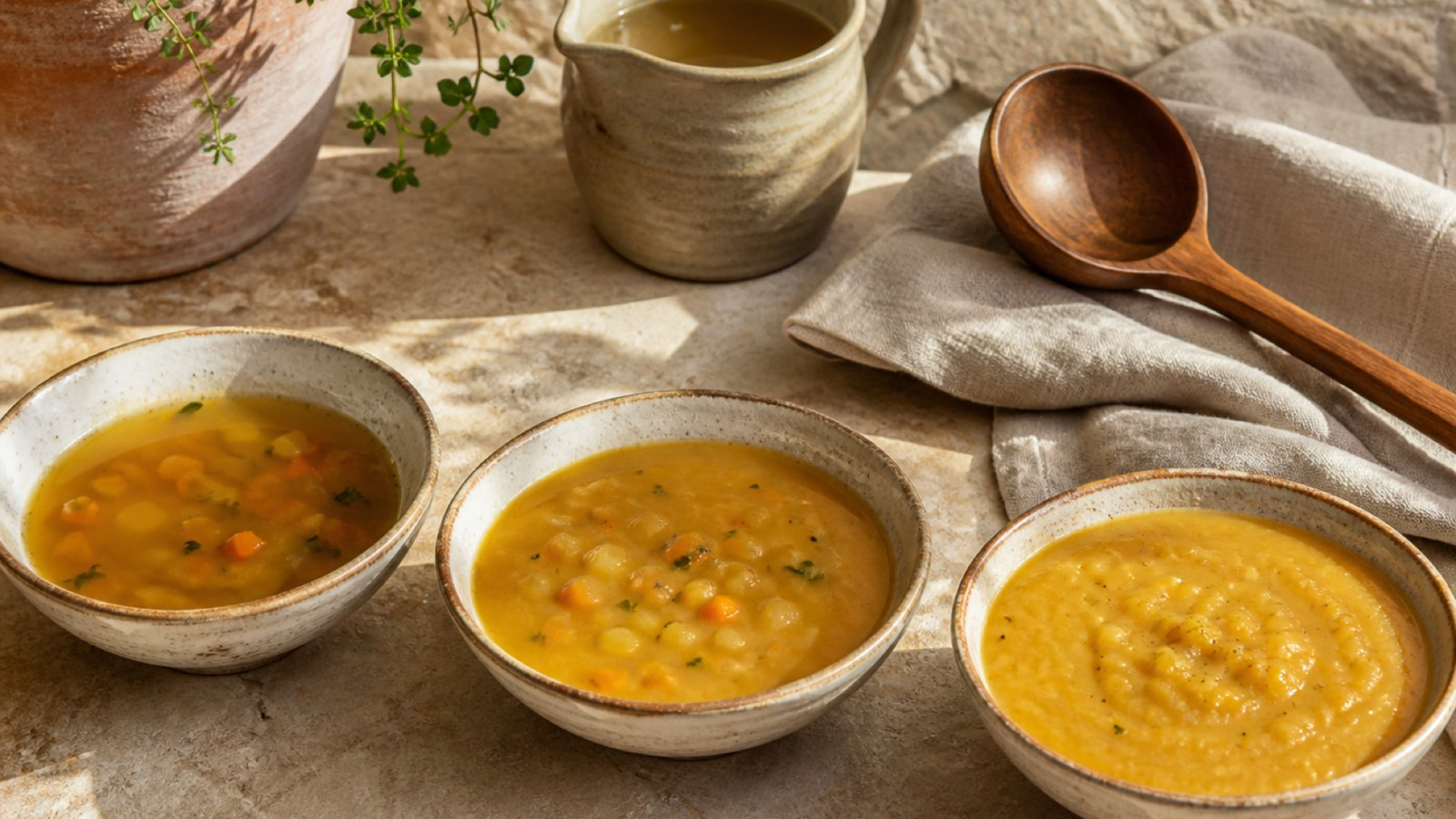
How to Fix Soup Consistency: Silky Broths, Slurries and Velvety Emulsions
A great soup is defined not only by its aroma and seasoning, but by its body. Achieving that perfect velvety mouthfeel—neither thin and watery nor heavy and starchy—is one of the hallmark skills of Mediterranean and classic hearth cookery.
Whether you are preparing a delicate golden broth or a hearty legume pot, here is the chef's guide to troubleshooting and mastering soup consistency.
1. When Soup Is Too Watery: 4 Professional Thickening Methods
Method A: The Slurry (Cornstarch or Starch Water)
A slurry is the fastest emergency fix for a broth that lacks viscosity.
- How to do it: Dissolve 1 tablespoon of cornstarch (or potato starch) in 2 tablespoons of cold water. Never add dry starch directly to hot soup—it will clump instantly.
- Application: Slowly whisk the cold slurry into simmering soup. Maintain a gentle boil for 1 to 2 minutes so the starch granules swell and cook out any raw powdery taste.
Method B: The Natural Vegetable Purée (Gluten-Free & Rich)
Instead of adding processed thickeners, borrow from the soup itself.
- How to do it: Ladle two cups of the soup's cooked root vegetables (carrots, potatoes, celery, or onions) and cooked lentils into a blender.
- Application: Blend until silky smooth and pour it back into the pot. This restores body and amplifies the authentic vegetable flavor without altering the seasoning balance.
Method C: The Traditional Roux (Flour & Butter)
Essential for cream-based soups like wild mushroom or chicken velouté.
- How to do it: In a separate pan, melt equal parts butter and flour over medium heat. Cook for 2 to 3 minutes until pale straw colored (blond roux).
- Application: Ladle warm broth into the roux while whisking vigorously, then fold the thickened liaison back into the main soup kettle.
Method D: Egg and Lemon Liaison (Terbiye)
The crowning touch of Greek, Cypriot, and Turkish meadow soups (Yayla Çorbası and Avgolemono).
- How to do it: Whisk 1 fresh egg yolk with the juice of half a lemon and 2 tablespoons of yogurt. Temper by slowly ladling hot broth into the egg mixture.
- Application: Turn off direct heat and stir the tempered liaison into the pot. It yields an unbeatable creamy gloss without heavy cream.
2. When Soup Is Too Thick: Rescuing Over-Reduced Pots
Starchy legumes like red lentils, chickpeas, and beans absorb liquid exponentially as they rest. A soup that had perfect consistency at noon can turn into a thick paste by dinner.
What to Dilute With:
- Never use cold tap water: It dilutes seasonings and drops the cooking temperature abruptly.
- Always use simmering stock or seasoned water: Add warm vegetable stock, light chicken stock, or boiling water with a pinch of sea salt in half-cup increments.
- Rebalance the acidity: Adding liquid reduces the perception of brightness. A squeeze of fresh lemon juice or a splash of white wine vinegar revives the palate.
3. Recommended Pairings & Kitchen Rules
- Avoid high boiling after adding dairy or egg liaisons: High heat causes proteins to curdle. Always simmer on low heat.
- Account for standing time: If you plan to serve soup later, leave it slightly looser than your desired final texture.
- Finish with herb-infused olive oil: A drizzle of warm olive oil bloomed with dry spearmint or Aleppo pepper seals moisture and elevates every spoonful.
Authored by the culinary editorial team at House Chef Cyprus. Explore authentic Mediterranean soup recipes: HouseChef Cyprus
Traditional Cypriot Techniques and Island Cooking Methods
The timeless secret of Cypriot cuisine lies in cooking techniques that honor the purity of fresh ingredients through patient, measured preparation. Rather than rushing with aggressive high heat, island home chefs rely on heavy cast-iron cookware or traditional earthenware casseroles simmered over low flames. In classic stew preparations, finely diced onions and local garlic are gently sweated without browning, preserving the delicate, fruity undertones of extra-virgin olive oil. As meats and vegetables simmer gently in their own natural juices, wild mountain herbs and sun-dried bay leaves infuse the broth with deep Mediterranean warmth. When baking, covered ceramic dishes lock in moisture, ensuring that cuts remain succulent and garden vegetables cook through to tender perfection.
Sourcing Geographical Heritage Produce in Cyprus
Blessed by a distinct microclimate, Cyprus yields some of the most aromatic agricultural produce in the eastern Mediterranean basin. Cold-pressed extra-virgin olive oil extracted from century-old groves on the foothills of Kyrenia and the Karpas peninsula forms the foundation of every meal while adding a vibrant golden finish when drizzled before serving. Herbs such as crushed coriander seeds, wild mountain thyme, hand-picked sumac, and fragrant dried mint are balanced to elevate main ingredients rather than overpower them. Fresh citrus freshly squeezed from Morphou orchards lends a crisp, sun-drenched acidity that brings brightness to hearty casseroles, roasted meats, and seafood marinades alike.
Home Chef Tips for Ingredient Storage & Freshness
When cooking island-inspired recipes at home, maintaining moisture balance and ingredient freshness is essential for authentic flavor. Produce selected from weekly farmers markets in Nicosia and Famagusta stays crisp and fragrant when wrapped in clean cotton cloths before storage. Heritage cheeses such as halloumi and fresh anari should be stored in natural brine or airtight glass containers to preserve their delicate curd elasticity. Resting cooked dishes overnight in a cool pantry or refrigerator allows aromatic oils to settle, deepening flavor complexity as celebrated in traditional village feasts.
Şefin Tavsiyesi · Ekipman
Bu Rehberde Önerilen Profesyonel Mutfak Ekipmanları
Rehberimizdeki teknikleri ve ada tariflerini evinizde şef standartlarında uygulamanız için tavsiye ettiğimiz mutfak gereçleri:
Pirge Ecco Profesyonel Şef Bıçağı 20 cm
Et, sebze ve taze ot doğramada mutfakta hız ve hassasiyet sağlayan yüksek karbonlu paslanmaz çelik bıçak.
Fakir / Soehnle Dijital Hassas Mutfak Tartısı
House Chef ölçülerinin ve hamur işlerinin tam kıvamında tutması için 1 gram hassasiyetinde dara özellikli tartı.
* Bilgilendirme: Bu kutuda yer alan ürün yönlendirmeleri gelir ortaklığı (affiliate) kapsamındadır. Beğendiğiniz ürünleri satın almanız durumunda siteye ek maliyet yansımaksızın küçük bir komisyon sağlanır.
Frequently asked questions
Çorbaya un eklerken neden topaklanıyor?
Un sıcak sıvıya değdiği anda dışı jelleşir ve içi kuru kalır; sonuç topaktır. Doğru yol meyane yapmaktır: unu tereyağında iki dakika kavurun, üzerine sıcak çorba suyunu azar azar ekleyip çırpın, pürüzsüz karışımı çorbaya dökün. Alternatif olarak nişastayı soğuk suda ezip ekleyebilirsiniz.
Terbiye neden kesiliyor?
Yoğurt ve yumurtadaki proteinler ani ısıda pıhtılaşır. Soğuk terbiye doğrudan kaynar çorbaya eklenirse anında kesilir. Çözüm temperlemedir: çorbadan birkaç kepçe sıcak suyu ince şerit hâlinde terbiyeye dökerek çırpın, sıcaklıklar yaklaşınca çorbaya ekleyin. Terbiyeye un eklemek de karışımı stabilize eder.
Terbiyeli çorba kaynatılır mı?
Kaynatılmaz. Terbiye eklendikten sonra çorba kaynarsa protein yine pıhtılaşır ve kesilir. Fokurdatmadan, yalnız hafif buğulanacak kadar ısıtın ve ateşten alın.
Çorbayı katkı kullanmadan nasıl koyulaştırırım?
Çorbanın bir kısmını alıp blenderdan geçirip geri ekleyin. Bu yöntem un veya nişasta katmadan kıvam verir ve tadı seyreltmez. Mercimek, patates, kabak ve nohutlu çorbalarda çok iyi sonuç verir.
Çorba soğuyunca neden koyulaşıyor?
Nişasta jelleşmesi soğudukça güçlenir, bu yüzden ocakta doğru görünen kıvam tabakta ağırlaşır. Servis edeceğiniz kıvamdan biraz daha sulu bırakmak doğru yaklaşımdır. Fazla koyulaşırsa sıcak su veya et suyuyla açın, soğuk sıvı kullanmayın.
Related recipes

Turkish Tomato Soup
A smooth tomato soup thickened with cooked-down paste and strained tomatoes rather than flour.