Carob: The "Black Gold" of Cyprus (History, Carob Syrup & How to Use It)
Why is carob called the black gold of Cyprus? The island's carob trade, how carob syrup (harnup pekmezi) is made and how to cook with it.
No unrelated or generic photo is shown until a topic-specific visual with verified licensing and provenance is approved.
Quick answer: Carob was called the "black gold" of Cyprus because, for more than two centuries, Cypriot carobs were one of the island's most valuable exports, shipped to Egypt, Syria, Constantinople, Russia, Italy and England, where they sold at a premium. Today carob is mainly enjoyed as carob syrup (harnup pekmezi in Turkish, haroupomelo in Greek), a naturally sweet, dark molasses eaten with tahini, used in desserts or drizzled over fresh cheese.
Key takeaways
-
Carob trees have grown in Cyprus since ancient times and were a major export from the 18th century.
-
The word carat is linked to carob: its seeds were historically used as weights for gems and precious metals.
-
Carob syrup is made by soaking, pressing and boiling down the pods. No sugar is needed.
-
Carob is naturally sweet and caffeine-free, which makes it a popular cocoa alternative in baking.
Why carob became Cyprus's "black gold"
Drive through Cyprus in late summer and you'll see gnarled evergreen trees hung with long, dark-brown pods. These are carob trees (Ceratonia siliqua, harnup or keçiboynuzu in Turkish, teratsia in the Cypriot Greek dialect). They grow in dry, rocky soil where little else will, and for generations they were a source of income for villages.
According to the Cyprus Food Museum, Cypriot carobs were exported extensively from the 18th century to Egypt, Syria, Constantinople, Russia and Italy. In English markets they sold for more than Portuguese or Sicilian carobs (Cyprus Food Museum). Most of the harvest went straight to the ports within a few months of picking. At home, carobs were eaten fresh or turned into syrup and sweets, and carob syrup became a basic household food, which is why it earned the name "black gold".
The old stone carob warehouses along the island's coasts are reminders of that trade, and in recent years Cyprus has planted thousands of new carob trees as interest in the crop has returned (phys.org).
The harvest: a family tradition
Carob harvest traditionally began in late August and lasted about three weeks. Men knocked the pods down from the branches with long sticks, and women and children gathered them into baskets. The whole family took part, much like the olive harvest in winter (read our Cypriot olive harvest story).
From carob seed to "carat"
Carob seeds are remarkably uniform in weight, so in ancient times merchants used them to weigh gems and precious metals. The Greek word for the carob seed, keration, is the origin of the word carat, still used for diamonds and gold today (Cyprus Food Museum). The seeds have a modern use too: they're the source of locust bean gum (E410), a natural thickener used in ice cream and sauces.
How carob syrup is made
-
Break and soak: Dried pods are crushed and soaked in water, traditionally overnight or longer, so their natural sugars dissolve.
-
Press and strain: The sweet liquid is pressed and strained from the pulp.
-
Boil down: The liquid is slowly reduced in large cauldrons until it becomes a thick, glossy, very dark syrup.
No sugar is added. The sweetness comes from the pod itself. Good carob syrup is thick, deep brown-black and tastes of caramel and dried fruit, with a slight cocoa-like note.
How to use carob syrup
| Use | How |
|---|---|
| Tahin-harnup (breakfast dip) | Mix 2 parts tahini with 1 part carob syrup and scoop it up with warm bread. This is the classic Cypriot breakfast pairing. |
| Over fresh cheese | Drizzle over fresh anari (nor), ricotta or yogurt. |
| Traditional sweets | Use it in pastelli (carob syrup and sesame or nut brittle) and in hand-made pastries. See our gullurikya with carob syrup. |
| Baking | Replace some of the sugar or honey in cakes and cookies. It adds moisture and a caramel flavour. |
| Drinks | Stir 1 tablespoon into warm milk or plant milk for a caffeine-free "chocolate" drink. |
| Glazes and marinades | Mix with soy sauce or pomegranate molasses and garlic for a sticky glaze on chicken or roast vegetables. |
Carob vs cocoa
Carob powder is made from roasted, ground pods and is often sold as a cocoa alternative. It's naturally sweet and caffeine-free, and it has a milder, caramel-like flavour rather than cocoa's bitterness. It won't taste exactly like chocolate, but in brownies, cookies and hot drinks it's a good ingredient in its own right. When you substitute, use a little less sweetener, because carob adds its own sweetness.
Where carob fits in Cypriot cuisine
Carob belongs with the island's other preserved foods: köfter and walnut sucuk from the grape harvest, paluze grape pudding, and the Cypriot walnut macun. These were ways of storing summer's harvest for the winter. For the bigger picture, read our guide to essential Cypriot ingredients and what to eat in North Cyprus.
Chef's tip: Mix tahin-harnup just before serving and don't stir it completely. Swirl the syrup into the tahini so each bite has a different balance of nutty and sweet. Warm bread or fresh simit is the best thing to dip.
Easy recipe: carob and tahini no-bake bites
This quick snack uses the classic Cypriot pairing. It makes about 16 bites.
-
100 g tahini
-
60 g carob syrup
-
120 g rolled oats
-
40 g walnuts, finely chopped
-
A pinch of salt; sesame seeds to coat
-
Stir the tahini, carob syrup and salt together until glossy.
-
Mix in the oats and walnuts. If the mixture is too loose, add a spoonful more oats. If it's too dry, add a little more syrup.
-
Roll into walnut-sized balls and coat them in sesame seeds.
-
Chill for 30 minutes. They keep in a closed container in the fridge for about a week.
Buying and storing carob syrup
Look for syrup that lists only carob (and water) as ingredients. Store it tightly closed in a cool cupboard. Over time some sugar may crystallise at the bottom of the jar, which is harmless: stand the jar in warm water and stir. In Cyprus, carob syrup is sold in village shops, markets and many supermarkets. Abroad, try Greek, Cypriot, Turkish or Middle Eastern grocers.
Frequently asked questions
Why is carob called black gold in Cyprus?
Because for centuries Cypriot carobs were one of the island's most valuable exports and fetched premium prices abroad, while carob syrup was an essential household food.
What is carob syrup used for?
Mostly with tahini as a breakfast dip, drizzled over fresh cheese or yogurt, and in traditional sweets such as pastelli. It also works in baking, hot drinks and glazes.
Does carob syrup contain sugar?
Traditional carob syrup has no added sugar. Its sweetness comes from the natural sugars in the pods, concentrated by boiling. Use it in moderation, like honey.
Is carob the same as chocolate?
No. Carob comes from the pods of the carob tree and cocoa from cacao beans. Carob is naturally sweeter and caffeine-free and has a milder, caramel-like flavour.
Is carob good for you?
Carob is naturally sweet and caffeine-free, and the pods and powder provide fibre. Carob syrup is concentrated, though, and high in natural sugars, so enjoy it in small amounts, like honey or molasses.
Sources
-
Cyprus Food Museum: Carob desserts, sweetmeats made from carob honey
-
phys.org: Thousands of carob trees planted as Cyprus revives "black gold"
Written by the House Chef Cyprus editorial team, Cyprus. Last reviewed: September 2026.
Şefin Tavsiyesi · Ekipman
Bu Rehberde Önerilen Profesyonel Mutfak Ekipmanları
Rehberimizdeki teknikleri ve ada tariflerini evinizde şef standartlarında uygulamanız için tavsiye ettiğimiz mutfak gereçleri:
Pirge Ecco Profesyonel Şef Bıçağı 20 cm
Et, sebze ve taze ot doğramada mutfakta hız ve hassasiyet sağlayan yüksek karbonlu paslanmaz çelik bıçak.
Fakir / Soehnle Dijital Hassas Mutfak Tartısı
House Chef ölçülerinin ve hamur işlerinin tam kıvamında tutması için 1 gram hassasiyetinde dara özellikli tartı.
* Bilgilendirme: Bu kutuda yer alan ürün yönlendirmeleri gelir ortaklığı (affiliate) kapsamındadır. Beğendiğiniz ürünleri satın almanız durumunda siteye ek maliyet yansımaksızın küçük bir komisyon sağlanır.
Reklam
Related recipes
Flaouna — Cypriot Easter Cheese Bread
An Easter bread filled with anari and halloumi, scented with mahlep and mastic in the dough. In Cyprus it is known as pilavuna.
Kolokoti — Cypriot Pumpkin and Bulgur Pasty
Pumpkin, bulgur and raisins in an olive oil pastry — the classic Cypriot pasty of the fasting season.

Turkish Cheese Börek
A tray börek moistened with a milk-and-oil mixture rather than soaked, with the cheese's salt balanced first.
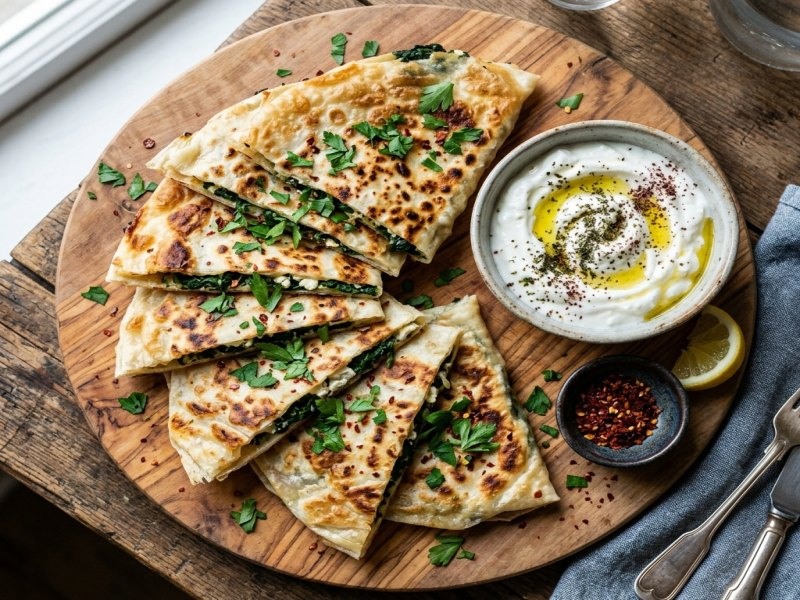
Spinach Gözleme
Thin dough filled with spinach, onion and white cheese, cooked on a griddle or in a pan. If the spinach isn't squeezed dry, the dough tears.
Related guides
Halloumi vs Feta vs Paneer: Differences, Substitutes & When to Use Each
Read more →Gluten-Free Baking Masterclass: Achieving Rise, Elasticity & Soft Crumb
Read more →Kıbrıs Usulü Kuru Bakla Favası ve Kırmızı Soğan Mezesi – Authentic Cyprus Culinary Guide
Read more →Reklam