Halloumi vs Feta vs Paneer: Differences, Substitutes & When to Use Each
Halloumi, feta and paneer look alike but cook very differently. Compare milk, salt, melting and flavour, and find the best halloumi substitute.
No unrelated or generic photo is shown until a topic-specific visual with verified licensing and provenance is approved.
Quick answer: Halloumi is a Cypriot sheep's- and goat's-milk cheese that is heated in whey, so it holds its shape and browns when grilled. Feta is a Greek brined cheese that crumbles and softens. Paneer is an unsalted, acid-set cheese from South Asia that also keeps its shape. For grilling, paneer is the closest substitute for halloumi; for salads, use feta.
Key takeaways
-
Halloumi (hellim) grills and fries without melting, and it tastes salty and a little minty. Since 2021 its name has been an EU Protected Designation of Origin, so real halloumi comes from Cyprus.
-
Feta is tangy, crumbly and brined. It softens in the oven but falls apart in a hot pan.
-
Paneer is mild and has almost no salt. Its texture is the closest match to halloumi, but you need to season it.
-
For salads, feta and Turkish beyaz peynir can stand in for each other. For grilling they can't replace halloumi.
Halloumi vs feta vs paneer at a glance
These three cheeses all come as white blocks, which is why people mix them up. They are made differently, though, and they behave very differently over heat. The table below covers the main points.
| Halloumi (Hellim) | Feta | Paneer | |
|---|---|---|---|
| Origin | Cyprus | Greece | South Asia |
| Milk | Sheep's and/or goat's milk, sometimes with cow's milk | Sheep's milk, up to 30% goat's milk (PDO) | Cow's or buffalo milk |
| How it sets | Rennet, then the curd is cooked in hot whey | Rennet, then aged in brine | Acid (lemon juice or vinegar), no rennet |
| Texture | Firm, springy, "squeaky" | Crumbly and creamy | Firm, soft and milky |
| Salt | High | Very high | Low or none |
| Melts? | No, it browns | Softens and crumbles | No, it holds its shape |
| Best for | Grilling, frying, breakfast, sandwiches | Salads, pastries, baking | Curries, tikka, stir-fries |
| Protected name | EU PDO (in force since Oct 2021) | EU PDO (since 2002) | None |
Why doesn't halloumi melt?
Cheese melts when heat loosens its protein network and fat and water run out. Halloumi is made differently. Once the curd has been formed with rennet, it is poached in its own hot whey. That heating tightens the casein proteins into a stable structure, so a slice of halloumi in a hot pan develops a golden crust and stays springy inside instead of turning into a puddle. Cheese writers call this group of cheeses "grilling cheeses" or "squeaky cheeses" (culture magazine explains the science).
Paneer resists melting for another reason: it is set with acid, not rennet. Acid-set proteins don't flow when heated, so paneer keeps its shape too, but it never gets halloumi's firm, salty bite. Feta has more moisture and a looser curd, so it goes soft and crumbly in the oven. That's why baked feta turns jammy while halloumi keeps its slices.
What "PDO halloumi" means when you shop
In April 2021 the European Commission registered Halloumi / Hellim as a Protected Designation of Origin (Implementing Regulation (EU) 2021/591). The protection took effect on 1 October 2021 (Cyprus Mail). Since then, only cheese made in Cyprus to the official specification can use either name in the EU. The specification requires sheep's and goat's milk to make up the majority of the milk, and the traditional fold with dried mint is part of the product's identity.
That's why supermarkets outside Cyprus sell similar cheeses as "grilling cheese" or under brand names. Some are good, but check the label for the milk type and salt level. Feta has had the same kind of protection since 2002: real feta is made in designated regions of Greece from sheep's milk, with up to 30% goat's milk (overview).
For more on how hellim is made in Cypriot villages, see our complete halloumi guide.
The best halloumi substitutes, ranked
If you can't find halloumi, or you need a vegan or low-salt option, here are the substitutes we recommend. We've ranked them by how well they grill.
| Rank | Substitute | Grills without melting? | How to adjust |
|---|---|---|---|
| 1 | Paneer | Yes | Soak slices in salted water (1 tsp salt per 250 ml) for 20 minutes. Dust with dried mint before frying. |
| 2 | Latin American frying cheese (queso para freír, queso blanco) | Yes | Already salty. Slice 1 cm thick and pan-fry. |
| 3 | Finnish bread cheese (leipäjuusto) | Yes, it's pre-baked | Warm it through rather than searing it. It's milder and sweeter. |
| 4 | Kefalotyri or kefalograviera | Partly: it crusts, then softens | Coat in flour and fry quickly, saganaki-style. Serve at once. |
| 5 | Extra-firm tofu (vegan) | Yes | Press for 20 minutes, marinate in brine, lemon and dried mint, then sear hard. |
| 6 | Feta | No | Use only in cold dishes such as salads, or bake it whole. |
When feta or beyaz peynir is the better choice
Halloumi isn't the best cheese for every dish. In a Turkish shepherd's salad (çoban salata), or crumbled over watermelon, feta or Turkish white cheese (beyaz peynir) spreads its salty tang through the whole bowl. Halloumi stays in separate chunks. Feta-style cheeses are also the usual filling for layered pastries like Turkish cheese börek, because they soften into the dough instead of staying rubbery.
Use halloumi when you want a cheese that behaves more like a piece of meat: something to grill, fry or put on a skewer. Some good places to start:
-
A halloumi and tomato breakfast pan for weekends
-
A Cypriot halloumi gözleme cooked on a griddle
-
Our guide to 12 traditional ways Cypriots eat halloumi
How to cook each cheese properly
Halloumi
Cut slices about 1 cm thick and pat them dry. Heat a dry non-stick or cast-iron pan over medium-high heat and cook for 1½ to 2 minutes a side, until golden. You don't need oil. If a brand tastes very salty, soak the slices in cold water for 10 to 30 minutes first. For village-style frying and storage tips, read how Cypriots fry and store hellim.
Feta
Bake a whole block at 200 °C (400 °F) for 15 to 20 minutes with tomatoes and olive oil, or crumble it cold. Keep leftover feta in its brine so it doesn't dry out.
Paneer
Marinate paneer before cooking, because it has almost no salt of its own. Sear it in a little oil until it browns on the edges, then fold it into a sauce at the end so it stays soft.
Chef's tip: Serve halloumi hot. As it cools, the proteins firm up again and the cheese turns rubbery and squeaky. Fry it last, just before you sit down to eat.
Frequently asked questions
Can I use feta instead of halloumi?
Only in cold dishes or bakes. Feta crumbles and softens when heated, so it can't be grilled or pan-fried in slices the way halloumi can. For grilling, use paneer or a Latin American frying cheese.
Is paneer the same as halloumi?
No. Paneer is set with acid, isn't aged and has almost no salt. Halloumi is set with rennet, cooked in whey, salted and often folded with mint. Both hold their shape when heated, which is why paneer is the best grilling substitute.
Is hellim the same as halloumi?
Yes. Hellim is the Turkish name and halloumi (hallumi) is the Greek name for the same Cypriot cheese. Both names are protected together under the EU PDO registration.
Why is my halloumi rubbery?
It was either cooked too little or left to cool. Cook halloumi over medium-high heat until both sides are golden, then serve it right away.
Is halloumi vegetarian?
Traditional halloumi is made with animal rennet. Some brands use microbial or vegetarian rennet, so check the label if you avoid animal rennet.
Sources
-
EUR-Lex: Commission Implementing Regulation (EU) 2021/591 registering Halloumi/Hellim (PDO)
-
Cyprus Mail: It's official, halloumi joins EU's PDO register (1 Oct 2021)
-
culture: Why don't halloumi and other grilling cheeses melt?
Written by the House Chef Cyprus editorial team, Cyprus. Last reviewed: September 2026.
Şefin Tavsiyesi · Ekipman
Bu Rehberde Önerilen Profesyonel Mutfak Ekipmanları
Rehberimizdeki teknikleri ve ada tariflerini evinizde şef standartlarında uygulamanız için tavsiye ettiğimiz mutfak gereçleri:
Pirge Ecco Profesyonel Şef Bıçağı 20 cm
Et, sebze ve taze ot doğramada mutfakta hız ve hassasiyet sağlayan yüksek karbonlu paslanmaz çelik bıçak.
Fakir / Soehnle Dijital Hassas Mutfak Tartısı
House Chef ölçülerinin ve hamur işlerinin tam kıvamında tutması için 1 gram hassasiyetinde dara özellikli tartı.
* Bilgilendirme: Bu kutuda yer alan ürün yönlendirmeleri gelir ortaklığı (affiliate) kapsamındadır. Beğendiğiniz ürünleri satın almanız durumunda siteye ek maliyet yansımaksızın küçük bir komisyon sağlanır.
Reklam
Related recipes
Flaouna — Cypriot Easter Cheese Bread
An Easter bread filled with anari and halloumi, scented with mahlep and mastic in the dough. In Cyprus it is known as pilavuna.

Kolokoti — Cypriot Pumpkin and Bulgur Pasty
Pumpkin, bulgur and raisins in an olive oil pastry — the classic Cypriot pasty of the fasting season.

Turkish Cheese Börek
A tray börek moistened with a milk-and-oil mixture rather than soaked, with the cheese's salt balanced first.
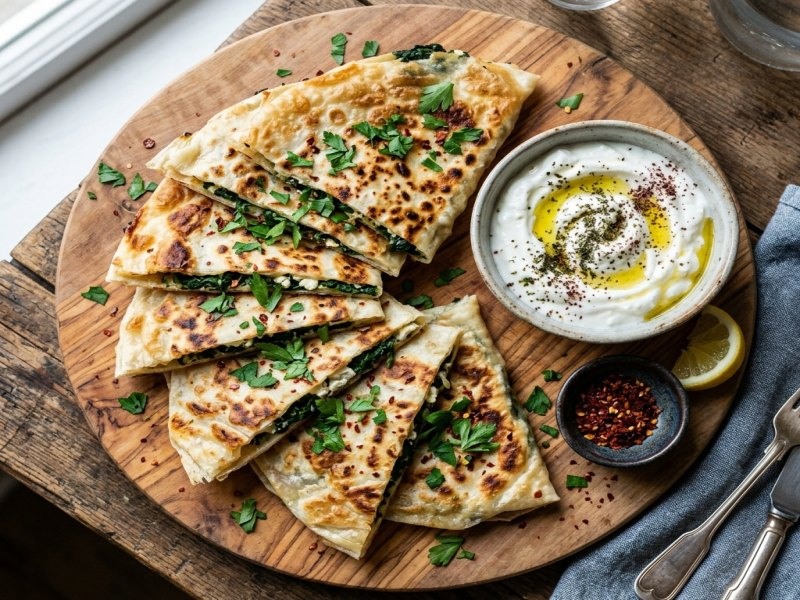
Spinach Gözleme
Thin dough filled with spinach, onion and white cheese, cooked on a griddle or in a pan. If the spinach isn't squeezed dry, the dough tears.
Related guides
Carob: The "Black Gold" of Cyprus (History, Carob Syrup & How to Use It)
Read more →Gluten-Free Baking Masterclass: Achieving Rise, Elasticity & Soft Crumb
Read more →Kıbrıs Usulü Kuru Bakla Favası ve Kırmızı Soğan Mezesi – Authentic Cyprus Culinary Guide
Read more →Reklam