How to Eat Halloumi Like a Cypriot: 12 Traditional Ways
Grilled, grated, baked into bread or served with watermelon: here are 12 traditional ways Cypriots eat halloumi (hellim), with recipes and tips.
No unrelated or generic photo is shown until a topic-specific visual with verified licensing and provenance is approved.
Quick answer: In Cyprus, halloumi (hellim) is eaten fried for breakfast, served cold with watermelon in summer, grated over pasta, folded into breads and pastries such as bitta and flaouna, stuffed into ravioli (pirohu) and griddled into gözleme. Young halloumi is often eaten raw with bread and olives. Mature halloumi is grated like parmesan.
Key takeaways
-
Cypriots eat halloumi at every meal, not only grilled.
-
Fresh (young) halloumi is mild and soft enough to eat raw. Mature halloumi, aged in brine, is firm and salty and good for grating.
-
The classic summer pairing is halloumi and watermelon: salty and sweet, cold and refreshing.
-
Many traditional island breads and pastries depend on halloumi, from everyday bitta to Easter flaouna.
Fresh vs mature halloumi: know which one you have
Before you cook, check what kind of halloumi you have. Fresh halloumi is sold soon after it's made. It's soft, mild and slightly springy, and many Cypriots eat it just as it is, with bread, olives and tomatoes. Mature halloumi is kept in salted whey for weeks or months. It gets firmer and saltier and crumbles when you cut it. Grate it over pasta or use it in breads. Most exported halloumi falls somewhere between the two and is made for frying.
If you're new to the cheese, start with our halloumi vs feta vs paneer comparison. Then work through the list below.
12 traditional ways to eat halloumi
1. Pan-fried for breakfast
This is the one most people know. Slices are fried in a dry pan until golden and served with tomatoes, cucumber, olives, boiled eggs and plenty of bread. Our halloumi and tomato breakfast pan cooks it all in one skillet.
2. Cold, with watermelon
On hot Cypriot afternoons, cold halloumi and ice-cold watermelon count as a meal. The salty cheese makes the watermelon taste sweeter, and a few mint leaves bring them together. For a restaurant-style version, try our Karpaz-style watermelon and halloumi salad with olive oil and pomegranate molasses.
3. Grilled over charcoal
At every Cypriot barbecue, thick slabs of halloumi go on the grill next to the meat. Grill it last so it goes straight from the fire to the plate. Serve it with a squeeze of lemon and some dried oregano or thyme.
4. In warm pitta
Grilled halloumi, tomato, cucumber and a few leaves go into a warm pitta for a fast lunch, much like a souvlaki without the meat. Some cafés also add grilled sausage or cured meat.
5. Grated over pasta (makarna bulli)
This is one of the island's best comfort foods. Pasta is boiled in the broth from a whole chicken, then topped with a thick layer of grated halloumi and dried mint. Read the story and method in our guide to Cypriot makarna bulli.
6. Folded into ravioli (pirohu)
Pirohu are Cypriot ravioli, handmade pasta filled with halloumi and mint. They're boiled, then finished with broth, butter or grated cheese. Our step-by-step pirohu guide shows how to seal them so they don't burst.
7. Baked into bitta
Bitta is an everyday island bread with diced halloumi and olives in a soft, oily dough. It's served warm with tea. See how it's made in our halloumi and olive bitta guide, or bake our halloumi and olive rolls.
8. Flaouna, the Easter cheese bread
Flaouna (pilavuna in Turkish Cypriot) are sesame-crusted pastries filled with grated halloumi and other cheeses, eggs, mint and raisins. Families bake them in large batches before Easter. Try our Cypriot flaouna recipe.
9. Griddled in gözleme
Thin hand-rolled dough is filled with crumbled halloumi and parsley, then cooked on a hot griddle until blistered. It's a favourite at village markets. Make our halloumi gözleme at home.
10. In breakfast batters (lalangi and akıtma)
Cypriot breakfast batters are pan-fried until crisp, and cooks often stir grated halloumi into the batter or serve it on the side. See our lalangi and cheese akıtma recipe.
11. In savoury börek with minced meat
In Famagusta, halloumi is mixed with spiced minced meat for a rich celebration börek. Our Famagusta-style meat and halloumi börek follows the traditional method.
12. On toasted village bread
Slice thick village bread, top it with halloumi and tomato and toast it until the cheese softens and browns. Finish with olive oil and oregano. It's a Cypriot version of cheese on toast. Here's our grilled halloumi village bread.
Bonus: anari, the cheese made from leftover halloumi whey
Traditional halloumi-making also produces a second cheese. The whey left after the curds are cooked is heated again to make anari (nor in Turkish), a soft ricotta-like cheese. Fresh anari is served with honey or carob syrup, baked into sweet pastries, or salted and dried for grating. Our fresh anari and honey pastry guide covers both.
How to buy and store halloumi
-
Check the milk: Traditional halloumi uses sheep's and goat's milk and tastes richer and more complex than cheese made only from cow's milk.
-
Look for mint: A few dried mint leaves in the fold are a traditional sign.
-
Storing an opened pack: Keep it submerged in its own brine, or in salted water (about 1 tablespoon of salt per 500 ml), in a closed container in the fridge. Use it within a few days.
-
Freezing: Halloumi freezes better than most cheeses. Wrap it well, thaw it in the fridge and fry or grill it rather than eating it raw.
Chef's tip: If you're grilling halloumi for a crowd, cut it into slices a little over 1 cm thick. Thin slices dry out and turn leathery before they get any colour.
How to grill halloumi on a barbecue without it sticking
Halloumi on the barbecue can end up stuck to the grate in pieces. These steps help:
-
Clean and oil the grate. Scrub off old residue, then wipe the hot bars with a folded paper towel dipped in oil.
-
Dry the cheese. Pat the slices completely dry. Surface moisture causes sticking and steaming.
-
Brush the cheese lightly with olive oil. Don't marinate it in a lot of oil, or it will flare up.
-
Use medium-high, direct heat and leave it alone. After about 2 minutes the crust releases by itself. If it resists, give it another 30 seconds.
-
Turn it once with a thin metal spatula, not tongs, which can tear the soft centre.
For skewers, alternate halloumi cubes with cherry tomatoes, peppers and red onion, and grill them last, just before serving.
Halloumi pairing cheat sheet
| Pair with | Examples | Why it works |
|---|---|---|
| Sweet fruit | Watermelon, figs, grapes, peaches | Sweetness balances the salt |
| Acid | Lemon, pomegranate molasses, capers | Cuts the richness |
| Herbs | Mint, oregano, thyme, parsley | Echoes the traditional mint fold |
| Sweet drizzles | Honey, carob syrup, chilli honey | Makes a salty-sweet snack or dessert |
| Bread | Village bread, pitta, simit | The simplest Cypriot lunch |
Frequently asked questions
Can you eat halloumi raw?
Yes. Halloumi is a cooked cheese, and fresh halloumi is often eaten raw in Cyprus with bread, olives and watermelon. Aged or very salty halloumi is better cooked or grated.
What goes well with halloumi?
Watermelon, tomatoes, cucumber, olives, mint, lemon, honey, figs, grapes and warm bread. It also goes well with grilled meats and lentil salads.
Why do Cypriots eat halloumi with watermelon?
The salty cheese and the sweet, watery fruit balance each other and make a light, cooling meal for the island's hot summers. The pairing has been a village habit for generations.
Is halloumi eaten hot or cold in Cyprus?
Both. It's eaten hot when grilled or fried, and cold when fresh, especially with watermelon. Once cooked, eat it hot, because it turns rubbery as it cools.
Sources
Written by the House Chef Cyprus editorial team, Cyprus. Last reviewed: September 2026.
Şefin Tavsiyesi · Ekipman
Bu Rehberde Önerilen Profesyonel Mutfak Ekipmanları
Rehberimizdeki teknikleri ve ada tariflerini evinizde şef standartlarında uygulamanız için tavsiye ettiğimiz mutfak gereçleri:
Pirge Ecco Profesyonel Şef Bıçağı 20 cm
Et, sebze ve taze ot doğramada mutfakta hız ve hassasiyet sağlayan yüksek karbonlu paslanmaz çelik bıçak.
Fakir / Soehnle Dijital Hassas Mutfak Tartısı
House Chef ölçülerinin ve hamur işlerinin tam kıvamında tutması için 1 gram hassasiyetinde dara özellikli tartı.
* Bilgilendirme: Bu kutuda yer alan ürün yönlendirmeleri gelir ortaklığı (affiliate) kapsamındadır. Beğendiğiniz ürünleri satın almanız durumunda siteye ek maliyet yansımaksızın küçük bir komisyon sağlanır.
Reklam
Kıbrıs Mutfağı
Doğrulanmış tariflerin tamamı tek koleksiyonda
Related recipes
Flaouna — Cypriot Easter Cheese Bread
An Easter bread filled with anari and halloumi, scented with mahlep and mastic in the dough. In Cyprus it is known as pilavuna.
Kolokoti — Cypriot Pumpkin and Bulgur Pasty
Pumpkin, bulgur and raisins in an olive oil pastry — the classic Cypriot pasty of the fasting season.

Turkish Cheese Börek
A tray börek moistened with a milk-and-oil mixture rather than soaked, with the cheese's salt balanced first.
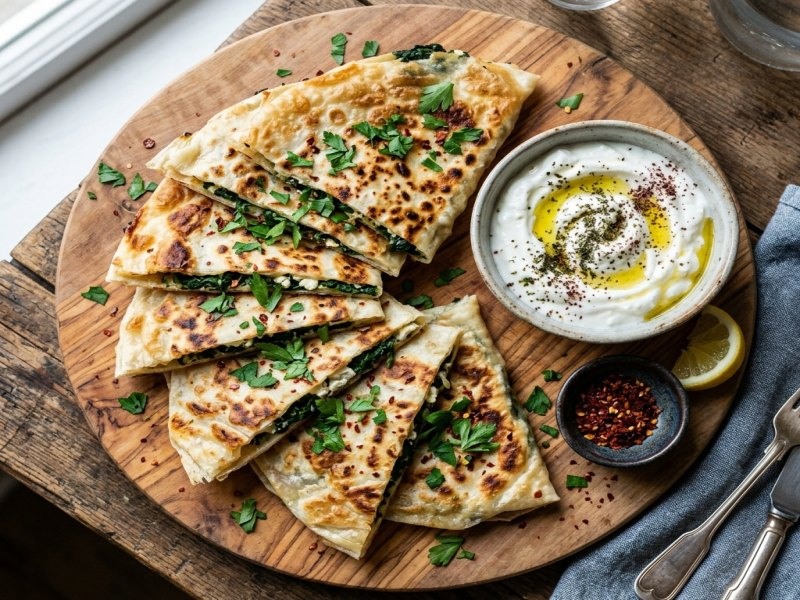
Spinach Gözleme
Thin dough filled with spinach, onion and white cheese, cooked on a griddle or in a pan. If the spinach isn't squeezed dry, the dough tears.
Related guides
Cacık vs Tzatziki vs Talattouri: The Eastern Mediterranean's Yogurt-Cucumber Dips Compared
Read more →Carob: The "Black Gold" of Cyprus (History, Carob Syrup & How to Use It)
Read more →Halloumi vs Feta vs Paneer: Differences, Substitutes & When to Use Each
Read more →Reklam