Heat the pan
Melt the butter and olive oil in a wide pan over medium heat; the olive oil keeps the butter from burning.
Turkish Cuisine Breakfast
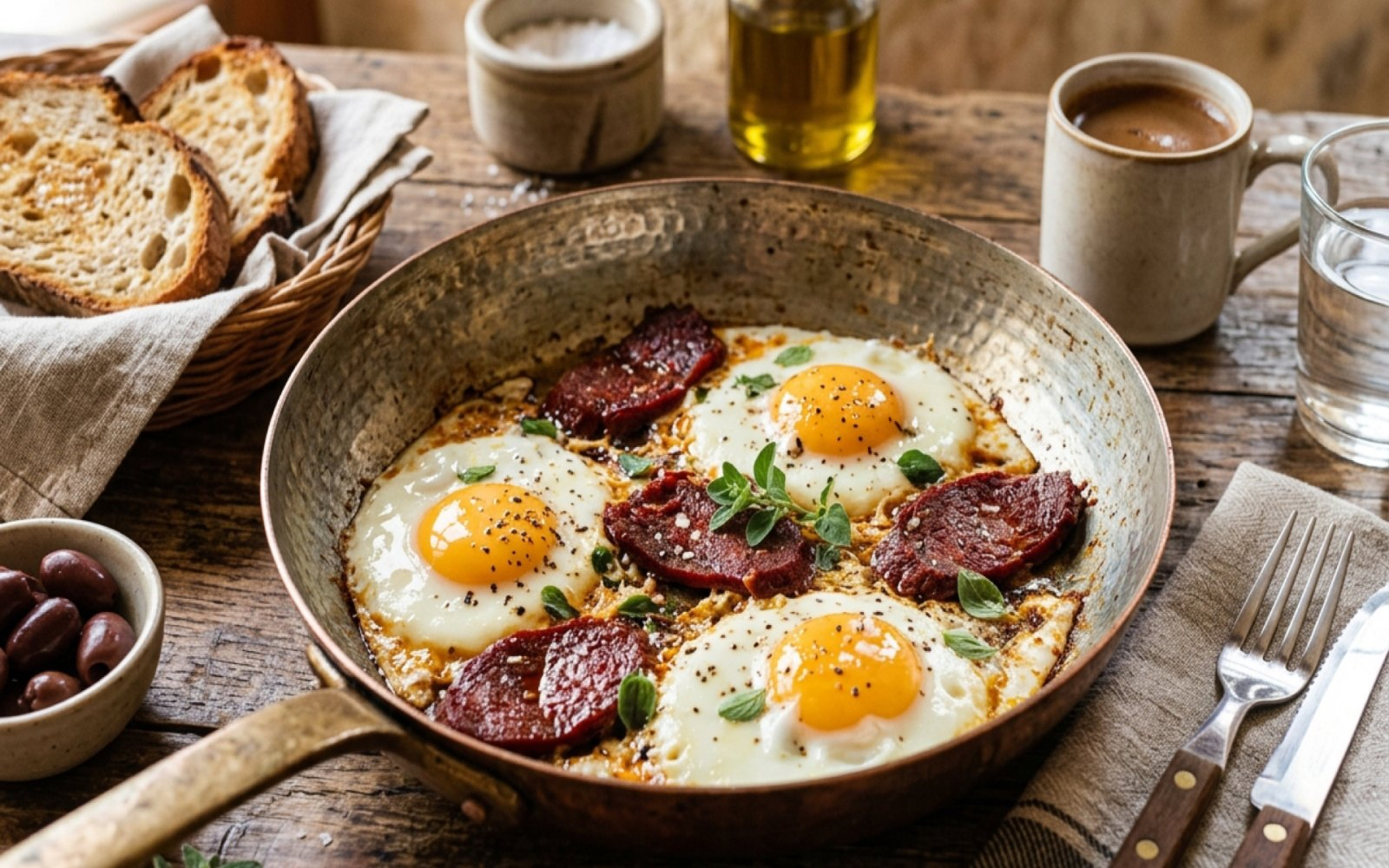
Pastırma is warmed briefly in butter and the eggs are cracked on top; the pan comes off the heat as soon as the whites set.
· votes Be the first to rate
Vote saved, thank you!
Copy and paste this snippet into your blog or website:
AI-generated image, editorially approved.
Step by step
Check off the steps you've completed; your progress is saved on this device.
Melt the butter and olive oil in a wide pan over medium heat; the olive oil keeps the butter from burning.
Lay the pastırma in the pan in a single layer and warm it for 30 to 40 seconds, until the edges curl slightly. The spice coating turns bitter over high heat, so keep the heat at medium.
Crack the eggs over the pastırma without breaking the yolks.
Sprinkle with black pepper and pul biber. Pastırma is salty, so taste first and add only a little salt, just on the egg whites.
Cover and cook for 3 to 4 minutes, until the whites are set and the yolks still runny; take the pan off the heat as soon as the whites set. Serve in the pan with warm bread.
Time's up! Enjoy your meal.
Transparent source info
Editorial and media review in progress
Last check: 17.09.2026
Recorded editorial source
Reklam
Your next recipe
Sigara börek filled with grated halloumi and fresh and dried mint, rolled thin and fried in hot oil until crisp.
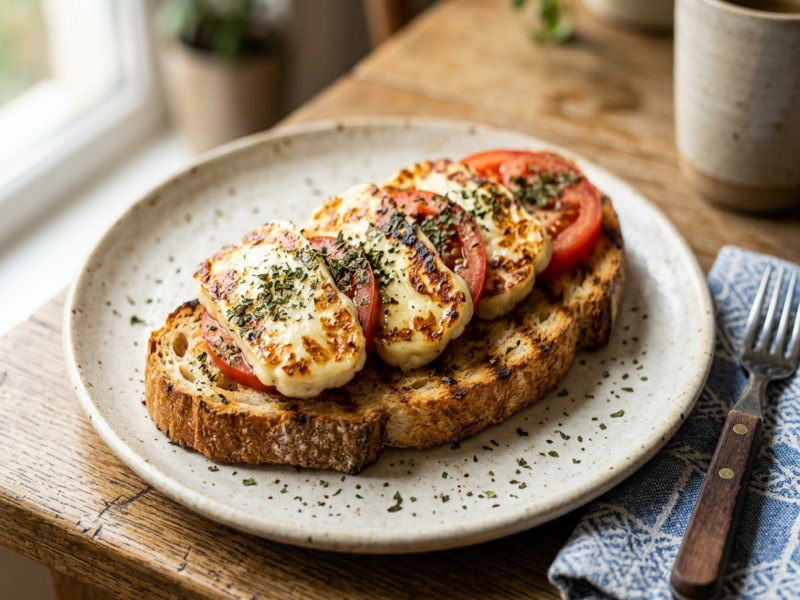
The halloumi is fried on its own before it meets the tomato, and its salt is drawn out in water first.
A breakfast pan where the tomato is cooked down first and the eggs go in last. How often you stir decides the texture.
Golden toasted halloumi and tomato, a perfect pairing in a pressed sandwich.
Culinary & Culture Guides
Turkish eggs (çılbır) are poached eggs on garlicky yogurt with sizzling chilli butter. Here's the history, the authentic method and fixes for common mistakes.
Read more →Turkish and Cypriot cooking is full of naturally vegan dishes: zeytinyağlı vegetables, çiğ köfte, mercimek köftesi, imam bayıldı and fava.
Read more →Adana, Urfa, İskender, Beyti, Ali Nazik, çöp şiş and more: the main types of Turkish kebab, where they come from and how to make them at home.
Read more →Reklam